How to Choose the Right Charger for Your Phone and Other Devices
A good phone charger needs to match your device in three important ways: power, connector and charging standard. For most modern devices, a USB-C charger with USB Power Delivery is the safest all-round choice—but that doesn't necessarily mean it will charge every phone at its maximum possible speed.
Before buying a new charger, it's worth checking how many watts your phone supports, which cable it needs and whether it relies on a specific fast-charging technology such as USB Power Delivery, PPS, Quick Charge, SuperVOOC or TurboPower.
The good news is that you don't need to become an electrical engineer just to charge your phone.
Here's what actually matters.
Table of Contents
- How to choose a charger for your phone
- Types of phone chargers
- How many watts does your charger need
- How much voltage does a phone charger use
- Can you use a more powerful charger with your phone
- Which charger do you need for fast charging
- How to choose one charger for multiple devices
- Common mistakes when buying a charger
- Which charger should you buy
- FAQ
How to choose a charger for your phone
Start by checking your phone's specifications.
The most important things to look for are:
maximum charging power;
charging port;
supported fast-charging standard;
required cable.
Your phone determines how much power it can actually accept. Connecting a 25W smartphone to a 100W charger doesn't suddenly turn it into a 100W-charging smartphone.
The two devices communicate and negotiate an appropriate charging level.
When choosing a charger, pay attention to:
wattage, measured in watts;
charger ports, such as USB-C or USB-A;
cable type, such as USB-C to USB-C;
fast-charging standards;
number of ports if you want to charge several devices;
safety protections and certifications.
If you're unsure where to start, a USB-C Power Delivery charger with enough wattage for your phone is the most universal choice today.
It can often charge not only your smartphone, but also tablets, wireless earbuds, power banks and even some laptops. One charger replacing half the contents of your cable drawer is rarely a bad thing.
Types of phone chargers
Not every charger is designed for the same situation.
For everyday use, you'll most commonly encounter:
wall chargers;
car chargers;
wireless chargers;
GaN chargers.
Wall charger
A wall charger is the traditional power adapter that plugs directly into an electrical outlet. It's still the best option for everyday charging because it's simple, efficient and available in almost every power level imaginable. Modern wall chargers increasingly use USB-C and USB Power Delivery, making them much more versatile than older USB-A adapters.
A charger with multiple ports can also power several devices simultaneously. That can be particularly useful on a desk, next to the bed or while traveling. Instead of packing separate chargers for your phone, tablet and headphones, you may be able to use one multi-port adapter.
Car charger
A car charger connects to your vehicle's 12V power socket or another compatible power outlet. It's especially useful if you use your phone for navigation, music streaming, long calls and Android Auto or CarPlay.
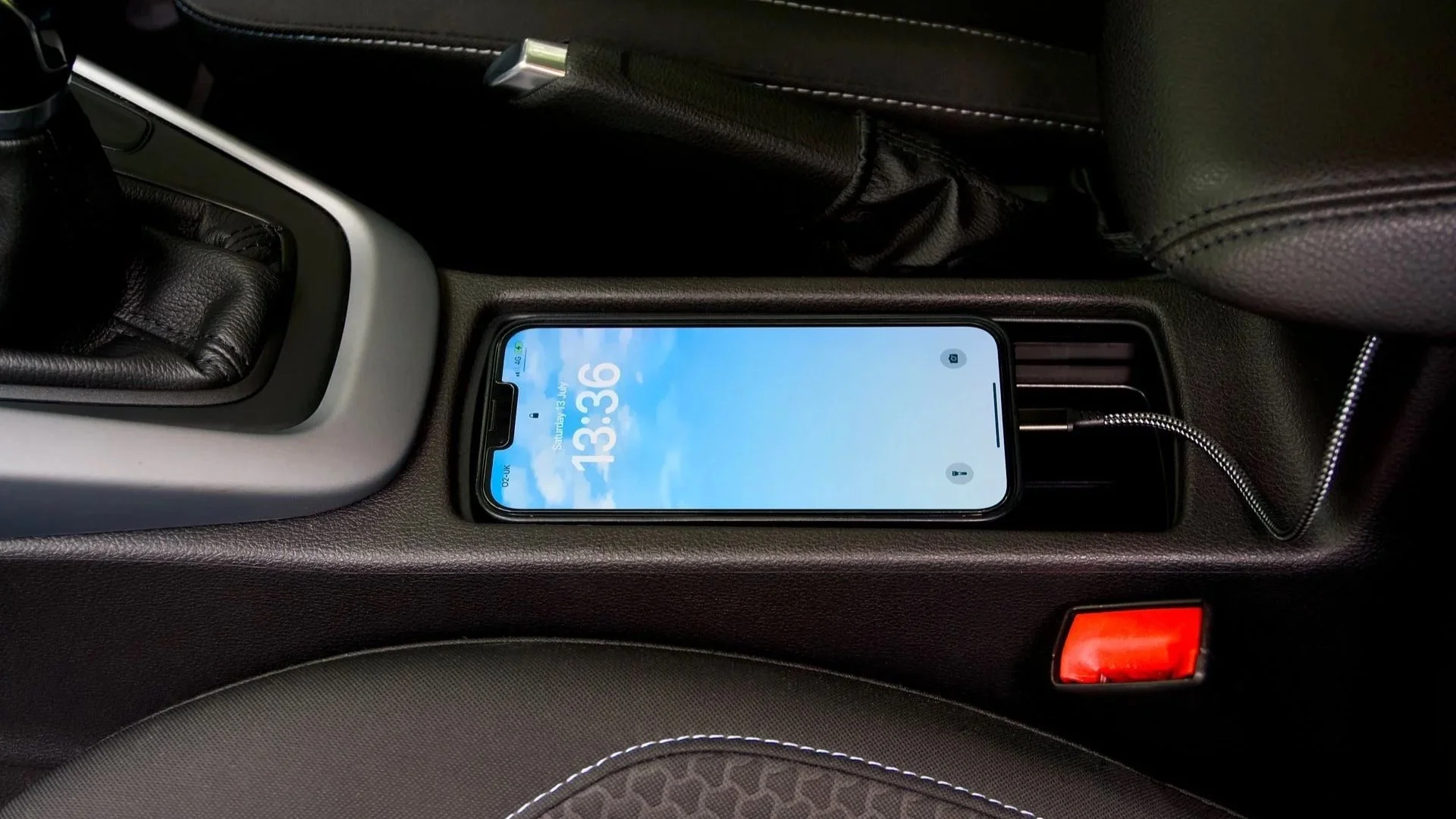
When choosing one, check the same things you would with a regular charger like maximum power, number of ports and fast-charging compatibility. For newer smartphones, I'd generally choose a model with at least one USB-C port. Older USB-A chargers can still work perfectly well, but they may not support the fastest standards available on newer devices.
Wireless charger
A wireless charger lets you charge a compatible smartphone without connecting a cable directly to the phone. Instead, you place the device on a charging pad or stand. Modern wireless charging is based primarily on standards such as Qi and Qi2.
Wireless charging is particularly convenient:
on a desk;
beside your bed;
in a kitchen;
anywhere you frequently put your phone down.
The main disadvantage is speed and efficiency. A good wired charger will usually be the better choice when you want to refill your battery as quickly as possible. Wireless charging makes more sense when convenience matters more than maximum speed.
Drop the phone onto the stand and forget about it. Sometimes that is worth considerably more than another ten watts.
GaN charger
GaN chargers use gallium nitride technology to deliver relatively high power from a smaller enclosure. That's why many modern 65W, 100W and higher-power chargers can be surprisingly compact.
GaN is particularly useful if you want one charger for several devices, such as:
phone;
tablet;
wireless earbuds;
power bank;
USB-C laptop.
But there's an important misconception worth clearing up: GaN itself doesn't automatically make your phone charge faster.
Charging speed still depends on:
charger wattage;
supported charging standards;
the phone;
the cable.
GaN mainly helps manufacturers build smaller and more efficient high-power chargers.
How many watts does your charger need
A charger's wattage describes the maximum amount of power it can provide. Generally, the higher the charging power supported by both the charger and device, the faster charging can be. But wattage alone doesn't determine speed. The charging protocol and cable matter too.
For many smartphones, 20–25W is enough. Phones designed for faster charging may support 30–45W or considerably more, depending on the manufacturer. Tablets often need more power, while accessories such as smartwatches and earbuds require much less.
| Device | Recommended charger power |
|---|---|
| Smartphone | 20–25W |
| Fast-charging smartphone | 30–45W |
| Tablet | 30–65W |
| Smartwatch | 5–10W |
| Wireless earbuds | 5–10W |
| Multiple devices | 65W or more, preferably with multiple ports |
Remember that these are general guidelines rather than universal rules. Always check the requirements of your specific device.
Does a 65W charger charge a 25W phone faster?
No. If your smartphone supports a maximum charging power of 25W, connecting it to a 65W charger doesn't force 65W into the battery. The phone will request only the amount of power it can use.
The advantage of buying a more powerful charger is versatility. A 65W model may charge your phone today and your tablet or laptop tomorrow.
How much voltage does a phone charger use
During basic USB charging, 5V is common. Modern fast chargers can negotiate higher voltages, including values such as:
9V;
12V;
15V;
20V.
With technologies such as USB Power Delivery, the charger and device communicate automatically and agree on the appropriate voltage and current.
You don't need to manually choose those values. That's one of the major benefits of standardized modern charging. Plug compatible devices together and let them negotiate the electrical paperwork.
Can you use a more powerful charger with your phone
Yes. A phone can generally be charged safely with a higher-wattage charger provided you're using reputable, compatible equipment. For example, if a phone supports 25W charging and you connect it to a compatible 65W USB-C charger, the phone won't simply receive the full 65W.
It will take only the power it supports. This makes high-power USB-C chargers particularly useful when traveling.
One 65W or 100W adapter can potentially replace separate chargers for your:
smartphone;
tablet;
earbuds;
power bank;
laptop.
Can a powerful charger damage your battery?
Not simply because its maximum wattage is higher. What matters is whether the charger and phone use compatible charging standards and properly negotiate power. The bigger concerns are poorly made chargers, questionable cables, overheating or equipment with inadequate electrical protection.
In other words, the 100W number printed on the box isn't the scary part. The mysterious $4 charger from a manufacturer whose name appears to have been generated by dropping Scrabble tiles probably deserves more scrutiny.
Which charger do you need for fast charging
To get maximum charging speed, your charger needs to support the same fast-charging technology as your phone. For many devices, USB Power Delivery is the most important standard. But that's only part of the picture.
USB Power Delivery
USB Power Delivery, or USB PD, is one of the most widely supported modern charging standards.
It's commonly used by:
smartphones;
tablets;
laptops;
power banks;
other USB-C devices.
One of its biggest strengths is flexibility.
The same charger may be able to power a small accessory and a laptop because the devices negotiate the appropriate power level.
PPS
PPS, or Programmable Power Supply, works alongside USB Power Delivery and allows voltage and current to be adjusted more dynamically.
It's particularly relevant to some Samsung Galaxy devices. If your Samsung phone supports Super Fast Charging, checking for the appropriate USB PD PPS support is more useful than simply buying whichever charger has the largest wattage number.
Quick Charge
Qualcomm's Quick Charge technology has appeared in many Android devices and accessories over the years.
Compatibility varies between generations, so you should still check the specifications of the particular phone and charger.
Manufacturer-specific charging standards
Some manufacturers use proprietary or semi-proprietary fast-charging technologies.
Examples include systems associated with brands such as:
OPPO;
realme;
Xiaomi;
Motorola.
A phone may technically charge from a normal USB-C PD adapter but achieve its maximum advertised speed only with compatible manufacturer-specific hardware.
That's why a universal 65W USB-C charger isn't automatically the fastest charger for every 65W-capable smartphone.
The cable matters too
The charger isn't the only piece of the equation. Your USB cable can limit charging speed. A cable designed for basic charging may not support the current required for higher charging levels. For more powerful USB-C charging, use a cable designed for the required wattage and standard.
This becomes particularly important for:
60W charging;
100W charging;
charging above 100W;
high-power laptops.
Some high-power USB-C cables include an e-marker chip that communicates their capabilities to connected hardware. You don't necessarily need to memorize cable electronics.
Just make sure the cable is rated for the power you're trying to use. The world's fastest charger doesn't help much if the cable in the middle quietly says, “best I can do is 15W.”
How to choose one charger for multiple devices
A good universal charger should ideally offer:
USB-C;
USB Power Delivery;
enough total wattage;
multiple ports;
appropriate fast-charging standards.
If you only charge a phone, 20–30W may be enough. For a phone plus accessories or tablet, 45–65W is a useful range. If you also want to charge a USB-C laptop, you may want 65W, 100W, 140W or more, depending on the computer.
For laptops that charge at more than 100W over USB-C, check support for the appropriate USB Power Delivery 3.1 implementation and make sure the cable supports the required power.
Watch how multi-port chargers divide power
One detail worth checking with multi-port chargers is power distribution. A charger advertised as 100W may not provide 100W from every port simultaneously.
For example, connecting a laptop and phone at the same time may cause the charger to divide its total output between the ports. Manufacturers usually provide a diagram showing how power is allocated when:
one port is used;
two ports are used;
three or more ports are used.
This matters much more than the giant “100W” printed on the front of the box.
Common mistakes when buying a charger
Choosing based only on wattage
This is probably the most common mistake. A 100W charger isn't necessarily better for your smartphone than a compatible 30W charger. Check charging standards too.
Buying a charger that's too weak
The opposite problem also exists. An old 10W or 15W adapter may technically charge a modern phone or tablet, but it can take considerably longer.
Ignoring the cable
A charger and phone may both support fast charging while the cable prevents them from reaching it. The whole chain needs to be compatible.
Assuming every USB-C charger is the same
USB-C is a connector. It doesn't tell you the charger's:
maximum wattage;
USB PD support;
PPS support;
other charging protocols.
Two chargers can look almost identical and behave very differently.
Buying an unknown charger with no useful specifications
Avoid chargers that don't clearly state:
output power;
voltage profiles;
charging standards;
safety information.
With something connected directly to mains power and then to an expensive smartphone, saving the final few dollars isn't always the clever part of the purchase.
Which charger should you buy
If you're choosing a charger for a modern smartphone, start with the phone's specifications.
Check:
maximum charging power;
supported charging technology;
port type;
cable requirements.
For many modern devices, a USB-C Power Delivery charger is the best starting point. If you're buying only for a phone, around 20–30W may be enough. For faster-charging phones, tablets or multiple devices, consider 45–65W.
If you also want to charge a laptop, a 65–100W multi-port GaN charger can be much more versatile. Just remember: The best charger isn't necessarily the most powerful one. It's the one that properly supports the devices you actually own.
FAQ
Does every USB-C charger support fast charging?
No. USB-C describes the connector, not the charger's charging capabilities. Check its wattage and supported standards such as USB Power Delivery and PPS.
Does the cable matter for fast charging?
Yes. The cable can limit charging power even if your phone and charger support higher speeds. Use a cable rated for the required power level and charging standard.
Can a laptop charger charge a phone?
Usually, yes, if it's a compatible USB-C charger. The phone will request only the amount of power it needs. A 100W laptop charger doesn't automatically send 100W into a smartphone.
How many watts should a phone charger have?
For many smartphones, 20–25W is sufficient. Models supporting faster charging may benefit from 30–45W or more, provided both the phone and charger support the same charging standard.
Can a higher-wattage charger damage my phone?
A compatible, properly designed charger shouldn't damage a phone simply because it can provide more power. The device controls how much power it accepts. Battery health is influenced more by factors such as heat and charging behavior than by the maximum wattage printed on a compatible charger.
What is the best universal charger?
For many users, a multi-port USB-C GaN charger with USB Power Delivery is the most versatile option. A 65W model can be enough for a phone, tablet and many ultraportable laptops. If you use more demanding laptops or regularly charge several devices simultaneously, a 100W or higher-power model may make more sense.
Is wireless charging worse than wired charging?
Not necessarily, but wired charging is generally the better choice when maximum speed and efficiency matter. Wireless charging is primarily about convenience. For a bedside table or desk, that trade-off can be perfectly reasonable.
Do I need PPS?
Only if your device benefits from it. PPS is particularly useful for certain phones that rely on it for their fastest supported charging modes. Check your smartphone's charging specifications before choosing a charger.