What Are Mini-LED and MicroLED? How Do They Compare with OLED and QLED?
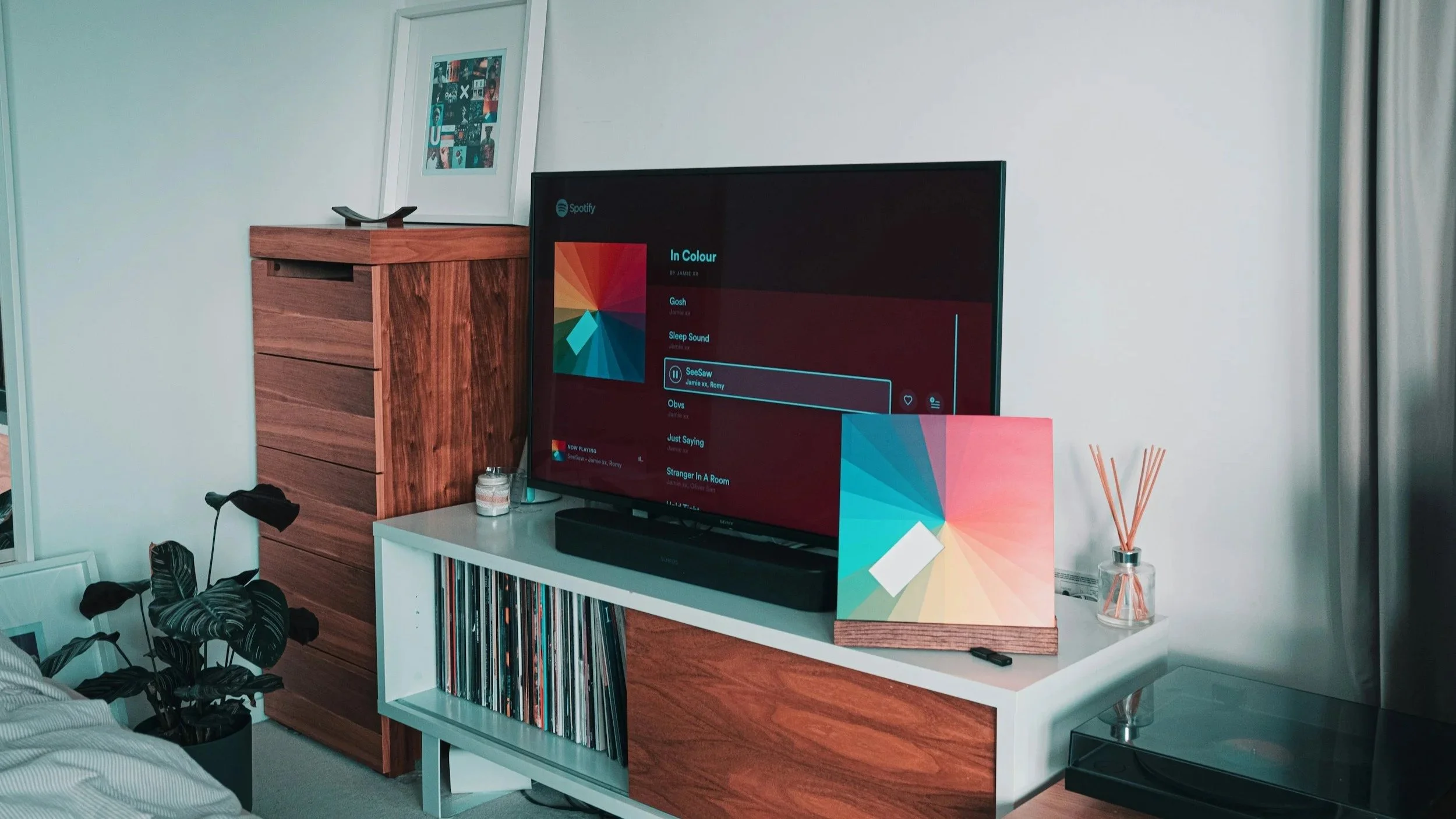
TV manufacturers are constantly looking for ways to make displays brighter, darker, more colorful, and generally better at convincing us that we absolutely need a new television. Mini-LED TVs are now widely available, while MicroLED represents a much more ambitious next step. Despite the similar names, the two technologies work very differently. Here’s how Mini-LED and MicroLED work, how they compare with OLED and QLED, and which one actually makes sense for your living room.
Table of Contents
How do Mini-LED TVs work
Mini-LED is essentially an advanced form of LCD/LED display technology.
Like a conventional LED TV, a Mini-LED model still uses an LCD panel that needs a separate light source behind it. The difference is in the backlight.
Regular LED televisions use LEDs to illuminate the LCD panel. Because that light can spill into neighboring areas of the image, black parts of the picture may look slightly gray rather than completely black.
That’s one of the main differences between LED-based TVs and OLED, where each pixel can produce — and completely switch off — its own light. If you want a broader explanation of the different display types, check out our guide to LED vs. OLED vs. QLED and plasma TVs.
Thousands of local dimming zones
Manufacturers improved traditional LED TVs by introducing local dimming. Instead of controlling the entire backlight as one unit, LEDs are divided into individual zones. When part of the image needs to be dark, the TV can dim the LEDs behind that area while keeping brighter parts illuminated.
More dimming zones usually mean more precise control. A basic LED TV may have relatively few zones, while more advanced models can use hundreds. Mini-LED takes this idea considerably further.
Smaller LEDs, much more precise backlighting
As the name suggests, Mini-LED TVs use much smaller LEDs. Because each LED is smaller, manufacturers can fit far more of them behind the display and divide the backlight into hundreds or even thousands of local dimming zones.
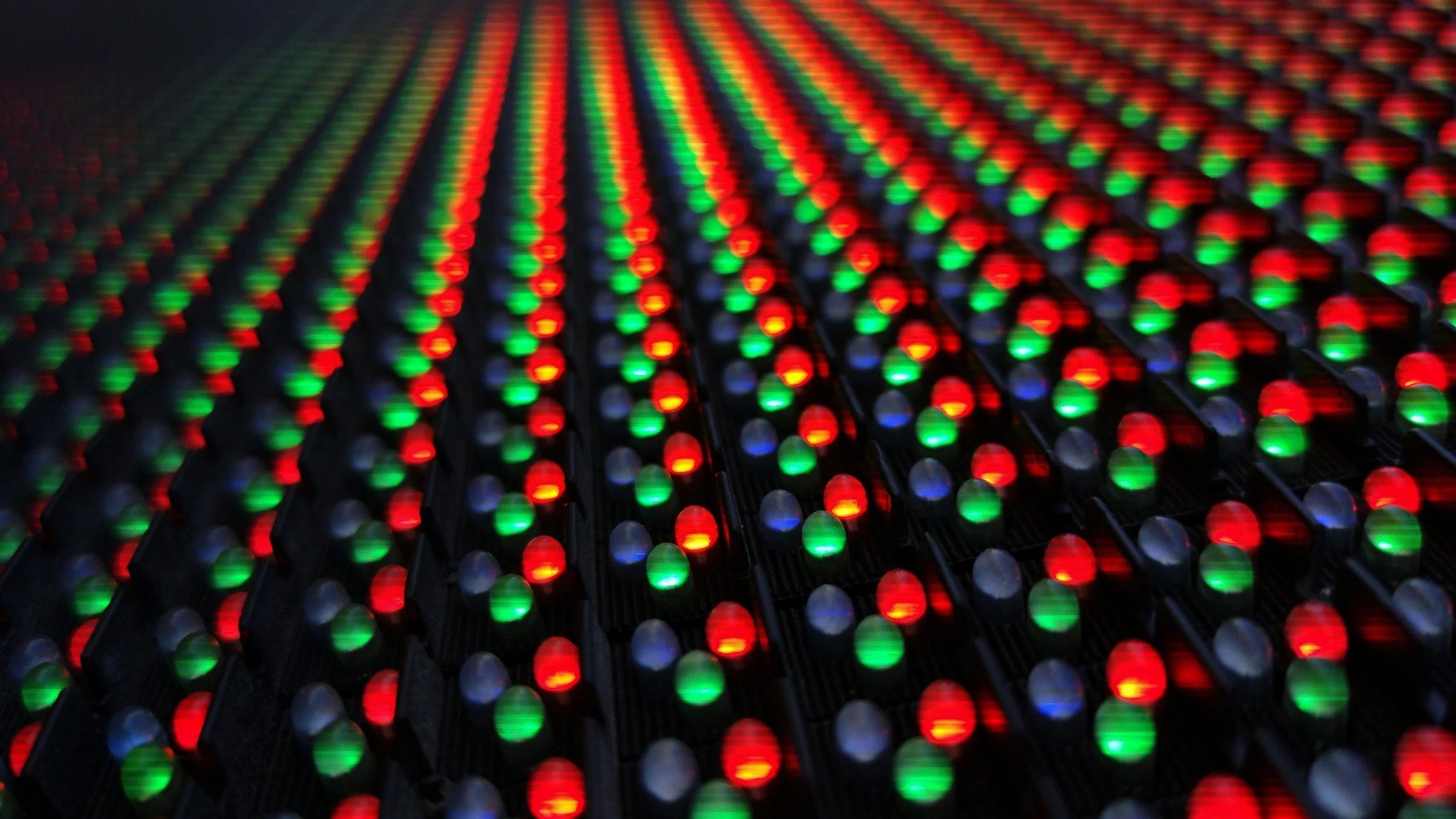
That allows Mini-LED TVs to produce:
deeper blacks than conventional LED TVs;
better contrast;
brighter highlights;
more detailed dark scenes;
stronger HDR performance.
Mini-LED can also be combined with quantum-dot technology, giving you the brightness and local dimming advantages of Mini-LED together with the vibrant colors associated with QLED.
Yes, manufacturers apparently decided that one display acronym per TV simply wasn’t enough.
Mini-LED TVs: Pros and cons
Mini-LED greatly improves what an LCD TV can do, but it doesn’t completely eliminate the limitations of using a backlight.
Advantages of Mini-LED
Better black levels and contrast
Thanks to a large number of dimming zones, Mini-LED TVs can display much deeper blacks and more detail in dark scenes than standard LED TVs.
They still can’t completely match OLED’s pixel-level control, but the gap is significantly smaller than with conventional LCD televisions.
Very high brightness
Brightness is one of Mini-LED’s biggest strengths.
Premium Mini-LED TVs can become extremely bright, making them excellent for HDR content and particularly effective in rooms with lots of daylight.
If your living room has enormous windows and the sun treats your TV screen like a mirror, Mini-LED has a strong argument in its favor.
No traditional OLED burn-in concern
Because Mini-LED is based on an LCD panel with a separate backlight, it isn’t susceptible to OLED-style permanent image retention.
That makes it attractive if you frequently display static content such as:
news-channel logos;
sports scoreboards;
game interfaces;
desktop elements.
Strong price-to-performance ratio
Mini-LED TVs generally cost more than basic LED models, but they can offer performance approaching premium display technologies without necessarily carrying the highest flagship prices.
Disadvantages of Mini-LED
Blooming
Because Mini-LED still uses a backlight, bright objects against a dark background may produce a slight glow around them. This is known as blooming or the halo effect.
The more precise the local dimming system, the less noticeable this becomes, but even excellent Mini-LED TVs can’t completely match OLED’s ability to control every pixel individually.
Black isn’t quite perfect
Mini-LED can produce impressively deep blacks, but it still can’t completely switch off individual LCD pixels in the same way OLED can.
As a result, an OLED TV still has the advantage in extremely dark scenes.
Viewing angles can vary
Mini-LED TVs still use LCD panels, so image quality may change when viewed from an angle.
Premium models often use additional layers and filters to improve off-axis viewing, but OLED generally remains stronger in this area.
Price
Mini-LED backlighting is more complex than a conventional LED system, and that complexity costs money.
High-end Mini-LED televisions can sometimes cost as much as OLED alternatives, so the choice often comes down to which strengths matter more to you.
Mini-LED vs. OLED: Which is better
This is probably the most important comparison. Both Mini-LED and OLED can deliver excellent picture quality, but they achieve it in completely different ways. OLED’s biggest advantage is simple: each pixel creates its own light and can switch off completely.
That gives OLED:
perfect black levels;
essentially pixel-level contrast;
excellent viewing angles;
very fast response times.
For movies in a dark or dimly lit room, OLED remains extremely difficult to beat. Black areas of the picture are genuinely black rather than dark gray, creating a very cinematic image.
Mini-LED fights back with brightness. A good Mini-LED television can be substantially brighter than many OLED models, making HDR highlights more intense and maintaining a strong image even in a heavily lit room.
So the simplest way to think about it is:
Mostly watch movies at night? OLED has the edge.
Watch lots of TV during the day in a bright room? Mini-LED can be the better choice.
What about gaming
Both technologies can be excellent for gaming on a consoles like PlayStation 5 or even PC Gaming. Modern Mini-LED and OLED TVs may offer features such as:
Variable Refresh Rate (VRR);
Auto Low Latency Mode (ALLM);
HDMI 2.1;
120Hz or higher refresh rates;
low input lag.
OLED still has an advantage in pixel response time, while Mini-LED offers extremely high brightness without the traditional concerns associated with displaying static interface elements for very long periods.
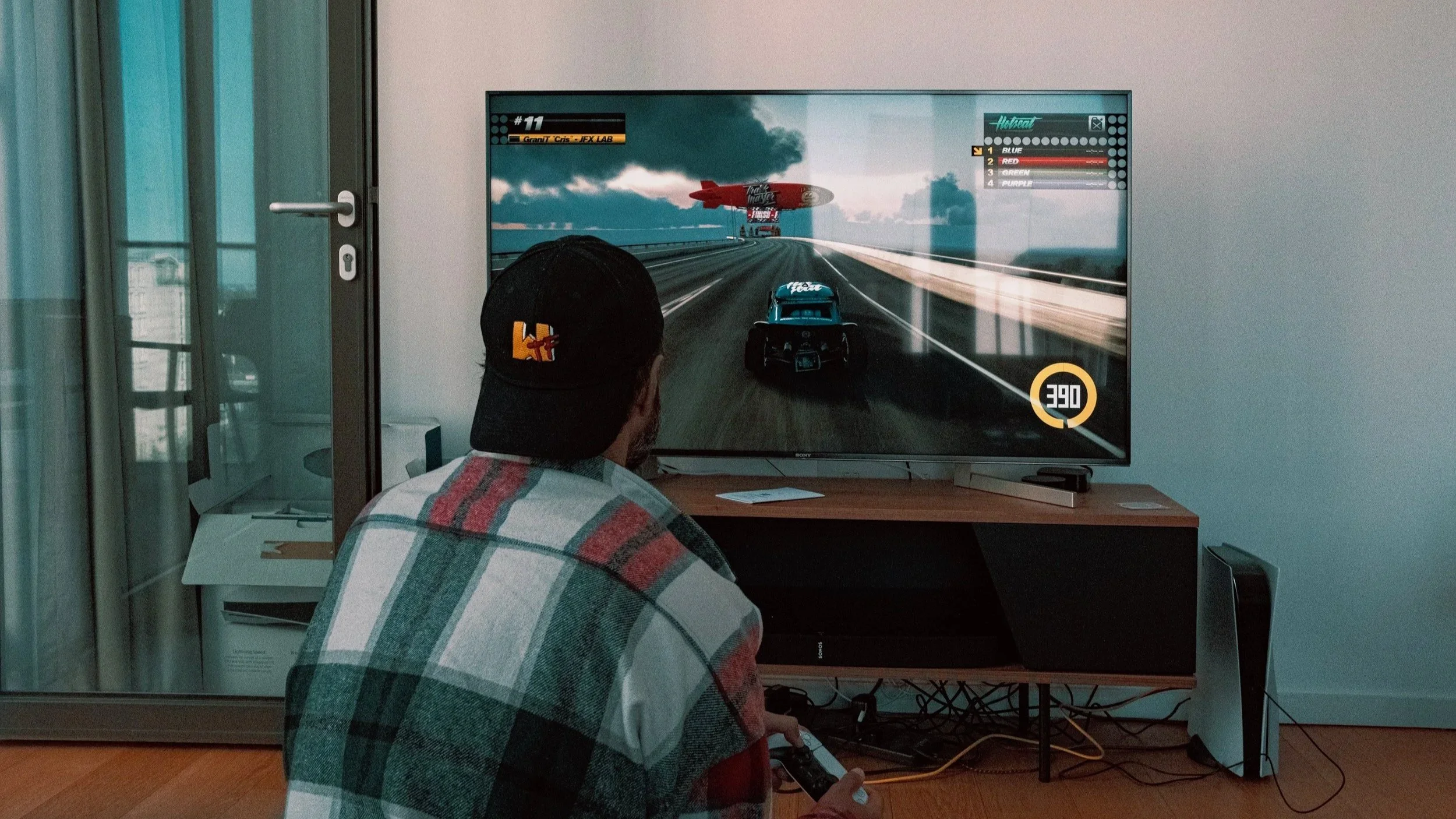
In practice, either can make your game look fantastic. Neither will make you better at it, unfortunately.
Which lasts longer
Modern OLED TVs include multiple protection systems designed to minimize burn-in, including pixel shifting and panel-refresh routines.
The risk is much lower than it once was, particularly with normal mixed viewing.
However, because Mini-LED uses an LCD panel, it doesn’t face the same type of permanent pixel wear associated with organic OLED materials.
On the other hand, Mini-LED can suffer from blooming — something OLED avoids entirely.
So there’s no technology without trade-offs. Television engineers remain disappointingly unable to defeat physics.
Are you considering an OLED TV? Check out our latest ranking of the best OLED TVs in 2026.
QLED vs. Mini-LED: What's the difference
This comparison can be confusing because QLED and Mini-LED aren’t necessarily competing technologies. A TV can actually use both.
QLED refers primarily to quantum-dot technology, which improves color reproduction and brightness. Mini-LED describes the type of backlight used behind an LCD panel.
That means a television can combine a Mini-LED backlight with a quantum-dot layer. And that combination can be very effective.
You get:
vibrant quantum-dot colors;
very high brightness;
more precise local dimming;
deeper blacks than conventional QLED;
strong HDR performance.
If your budget is limited, a standard QLED TV can still be an excellent option, particularly for daytime viewing.
If you want stronger contrast and more precise backlight control while maintaining very high brightness, Mini-LED is the more advanced choice.
Just keep blooming in mind. Premium models reduce it considerably, but they can’t completely eliminate it.
What is MicroLED
MicroLED is a completely different story. Unlike Mini-LED, MicroLED or Micro RGB display, doesn’t use tiny LEDs simply as a backlight. The LEDs themselves create the image. That makes Micro RGB a self-emissive display technology, conceptually closer to OLED than to conventional Mini-LED.
Micro RGB TVs are still far from becoming mainstream consumer products. The technology has appeared in extremely large and expensive displays like this LG 100 Inch 95B Series, but cost and manufacturing complexity remain major barriers.
For now, MicroLED is less “What should I buy?” and more “What might my living room look like after winning the lottery?”
How does MicroLED work
A MicroLED display contains millions of microscopic LEDs that directly produce the image. Each can emit its own light without requiring a traditional LCD layer and backlight. That gives MicroLED many of OLED’s most important strengths:
extremely deep blacks;
excellent contrast;
precise control over the image;
wide viewing angles.
There is one crucial difference. OLED uses organic light-emitting materials. MicroLED uses inorganic LEDs. This means MicroLED has the potential to combine OLED-like black levels and pixel-level control with extremely high brightness and excellent durability.
In other words, it’s trying to take the best parts of OLED and high-end LED displays and put them into one technology. Easy enough in theory. Making millions of microscopic LEDs work perfectly together at consumer-TV prices is the slightly difficult part.
MicroLED: Brightness, efficiency, and modular displays
MicroLED’s self-emissive design offers several potential advantages. Because there is no conventional backlight, the technology can be extremely energy-efficient while still delivering very high brightness. It can also provide wide viewing angles, so the image remains consistent even when you aren’t sitting directly in front of the screen.
Another unusual benefit is modularity. MicroLED screens can potentially be built from multiple display modules, allowing manufacturers to create unusual screen sizes and aspect ratios. Some implementations can also display several video sources on different parts of the same screen simultaneously.
That could mean watching a game while displaying statistics next to it, or playing on a gaming console while keeping a YouTube walkthrough open at the same time. Whether that’s peak productivity or peak distraction is entirely up to you.
Mini-LED vs. MicroLED: Evolution or Revolution
The easiest way to summarize the difference is this:
Mini-LED is an evolution of LCD television technology.
MicroLED is an entirely different display technology.
Mini-LED takes the familiar LCD/LED formula and dramatically improves the backlight. It delivers excellent brightness, much better contrast than conventional LED TVs, strong HDR, and deep blacks. If you want premium picture quality but don’t want OLED, Mini-LED is one of the strongest alternatives available today.
MicroLED, meanwhile, has the potential to be something much bigger. Its self-emissive inorganic LEDs could eventually combine:
OLED-like perfect blacks;
extremely high brightness;
excellent contrast;
wide viewing angles;
high durability;
no traditional OLED burn-in concerns.
The problem is that MicroLED remains extremely difficult and expensive to manufacture at normal consumer sizes and prices. So Mini-LED is something you can realistically put in your living room today.
MicroLED is something you can realistically put on your wish list.
Preferably a very long-term one.