LED vs. OLED vs. QLED vs. Plasma: What’s the Difference

Buying a TV in 2026 means dealing with an impressive collection of acronyms: LED, QLED, OLED, Mini-LED, MicroLED… and somewhere in the background, plasma is still enjoying retirement. If you’re wondering which TV technology is right for you, it helps to understand how they actually differ. Here’s what LED TVs do, how they compare with QLED and OLED, and whether plasma still matters today.
Table of Contents
How does an LED TV work
In modern TVs, the image is created by a display panel. In an LED TV, that panel requires a separate backlight, because the liquid crystals themselves don’t produce light. That illumination comes from LEDs.
LED TVs are essentially an evolution of older LCD technology. In fact, when people say “LCD TV” today, they’re often referring to an LED-backlit LCD television. The main difference is the type of backlight: older LCD models typically used CCFL fluorescent lamps, while modern TVs use LEDs. Switching to LEDs allowed manufacturers to build thinner, more energy-efficient TVs while improving brightness and color performance.
There are several ways those LEDs can be arranged:
Edge-lit LED TVs position the LEDs around the edges of the panel. This can help make the TV thinner, although brightness may be less uniform across the screen.
With full-array backlighting, LEDs sit behind more of the display, which can improve uniformity.
The best results come from local dimming, where groups of LEDs are divided into independently controlled zones. Dark areas can be dimmed while bright parts of the picture remain bright, improving black levels and contrast.
You can browse LED TVs here.
LED vs. QLED: What's the difference
QLED TVs build on the same basic LCD/LED concept but add a layer of quantum dots.
The technology became particularly associated with Samsung TVs, although other manufacturers, including TCL, now offer plenty of QLED models as well.
Like a conventional LED TV, a QLED model still uses an LED backlight. The difference is the additional quantum-dot layer, which modifies the light before it reaches the color filters.
The result can be higher brightness, a wider color range, and more vibrant colors, especially when displaying HDR content.
So, should you choose LED or QLED?
If you regularly watch TV during the day or your living room gets plenty of sunlight, QLED TVs are particularly attractive because of their high brightness.
They’re the kind of TVs that don’t immediately surrender just because someone opened the curtains.
LED vs. OLED: Which is better
OLED works very differently. With an OLED TV, each pixel produces its own light. There’s no separate LED backlight sitting behind the panel.
Every pixel can switch on, change brightness, or turn off completely. And “off completely” is the important part.
Because an OLED pixel can produce no light at all, OLED TVs can display true black, creating extremely high contrast and excellent shadow detail.
That’s why OLED is particularly impressive in movies with lots of dark scenes. Instead of “dark gray pretending to be black,” you get actual black.
The lack of a traditional backlight also allows manufacturers to build exceptionally thin displays.
Is OLED always better?
Not necessarily.
Traditional LED, QLED, and particularly high-end Mini-LED TVs can achieve extremely high brightness, which makes them attractive in bright rooms.
OLED really shines — literally and figuratively — when you watch movies and TV shows in the evening or in a room where you can control the lighting.
If that sounds like you, check out our ranking of the best OLED TVs.
OLED is also a great option for gaming thanks to its extremely fast pixel response and low input lag. Motion looks clean, and modern OLED gaming TVs frequently support features such as 120Hz or higher refresh rates, HDMI 2.1, VRR, and high-frame-rate 4K gaming.
One potential drawback is burn-in. Leaving static elements such as news-channel logos or game HUDs on screen for very long periods can theoretically cause permanent image retention.
Modern OLED TVs include numerous protection systems designed to minimize that risk, so for normal mixed use it’s far less concerning than it was with earlier generations.
Still, if CNN is going to live permanently in the bottom-right corner of your screen for the next six years, it’s something worth keeping in mind.
LED vs. plasma: Does plasma still matter
As a buying decision in 2026, LED vs. plasma isn’t really a thing anymore.
Plasma TVs are no longer manufactured for the mass market, although plenty of them are still alive and well in people’s homes — often accompanied by an owner who will enthusiastically explain why their 15-year-old Panasonic still looks better than your new TV.
And, to be fair, plasma had some genuine strengths. Like OLED, plasma didn’t rely on a conventional backlight. Plasma panels contained tiny cells filled with gases, primarily xenon and neon. Electrical energy turned those gases into plasma, producing ultraviolet light that excited phosphors to create the visible image.
The technology delivered excellent contrast, natural colors, and extremely fast response times, making plasma particularly good at displaying motion. That made plasma TVs popular among movie enthusiasts. So why did they disappear?
There were several drawbacks:
relatively high power consumption;
heavy and bulky designs;
lower brightness compared with modern LED TVs;
potential phosphor burn-in;
image flicker and other artifacts on some models.
Eventually, LCD/LED technology became cheaper, brighter, thinner, and more energy-efficient, while OLED took over much of plasma’s premium picture-quality territory. Plasma had a good run. Pour one out for it — preferably nowhere near the electronics.
Which TV technology should you choose
The best technology depends primarily on what you watch, when you watch it, the room your TV will be in, and how much you want to spend.
For many buyers, a standard LED TV still offers excellent value for money.
It’s a sensible choice if you want a versatile television for everyday TV, streaming, movies, and sports without paying for premium display technology.
LED models are also widely available in smaller screen sizes, making them particularly suitable for bedrooms, kitchens, offices, or smaller apartments.
Which technology is best for movie lovers?
If movies are your priority and you’re willing to spend more for picture quality, OLED and higher-end QLED or Mini-LED TVs are worth considering.
OLED has the advantage when it comes to black levels and contrast.
Dark scenes can look spectacular because individual pixels can completely turn themselves off. If you love watching movies at night with the lights dimmed, OLED is difficult to beat.

QLED and Mini-LED TVs, meanwhile, tend to have an advantage in brightness.
That makes them particularly effective in bright living rooms or for daytime viewing.
So the simple version is:
Dark room? OLED.
Bright room? QLED or Mini-LED deserves serious consideration.
That’s a simplification, of course, but it’s a useful place to start.
OLED and many premium QLED models also offer wide viewing angles, which can be important if you regularly watch movies or sports with a group rather than sitting directly in front of the TV.
OLED generally has the advantage here.
Which TV technology is best for gaming?
Gamers have plenty of good options in 2026.
OLED TVs are particularly strong for gaming because of their extremely fast response times, excellent contrast, low input lag, and support for high refresh rates.

Many modern OLED, QLED, and Mini-LED gaming TVs also support HDMI 2.1, allowing features such as:
4K gaming at 120Hz;
Variable Refresh Rate (VRR);
Auto Low Latency Mode (ALLM);
higher frame rates from modern consoles and gaming PCs.
A good LED TV can still be perfectly capable for gaming, especially if you don’t need every high-end feature.
Just remember that the letters on the box aren’t everything. Refresh rate, HDMI specification, VRR support, and input lag can matter just as much as whether the TV says OLED or QLED.
Your PlayStation does not care how impressive the marketing acronym sounds.
Which technology is best for sports?
For sports, motion handling and brightness matter a lot.
Fast action can expose poor response times or weak image processing very quickly — particularly during soccer, basketball, hockey, racing, and other sports where objects are constantly moving across the screen.
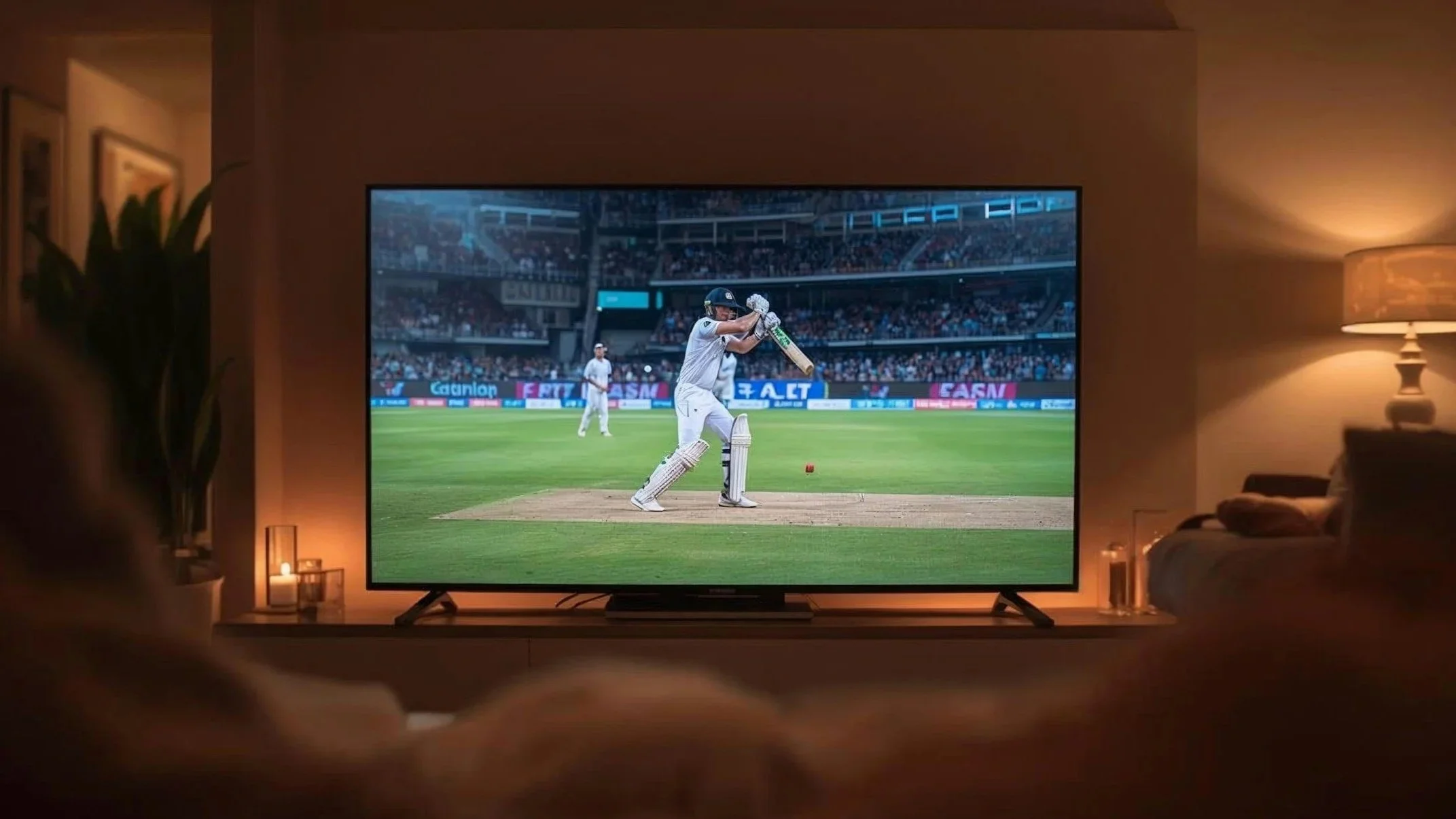
OLED and higher-end QLED or Mini-LED TVs are especially good choices for sports, particularly models with 120Hz or higher refresh rates.
OLED offers extremely fast pixel response, while bright QLED and Mini-LED TVs can work particularly well for daytime sports in well-lit rooms.
Are new TV technologies emerging
TV technology never really stands still.
Some technologies disappear entirely. Remember 3D TVs?
Manufacturers spent years trying to convince us that wearing plastic glasses in our own living rooms was the future. Consumers politely disagreed, and by around 2017 the feature had largely disappeared from new TVs.
More recent developments include Mini-LED and MicroLED.
You can read more about them in our guide to Mini-LED and MicroLED technology.
What is Mini-LED?
Mini-LED is still an LCD-based technology, but it uses much smaller LEDs for the backlight.
Because the LEDs are smaller, manufacturers can fit many more of them behind the panel and divide them into a larger number of independently controlled dimming zones.
That can result in:
better contrast;
deeper blacks;
higher brightness;
improved HDR performance;
more precise local dimming.
It still can’t switch off individual pixels the way OLED can, so you may occasionally notice blooming — a glow around bright objects displayed against a very dark background.
But the best Mini-LED TVs can deliver impressive results, especially in bright rooms.
Manufacturers also combine Mini-LED with other display technologies. LG, for example, offers QNED TVs. You can learn more in our guide explaining what QNED technology is.
What about MicroLED?
MicroLED takes the idea much further.
Instead of using tiny LEDs merely as a backlight, MicroLED displays use microscopic self-emissive LEDs to create the image itself.
In theory, that gives MicroLED some of the biggest advantages of OLED — including individual pixel control and excellent black levels — while also offering extremely high brightness.
The problem?
Price.
Manufacturing MicroLED displays remains extremely expensive, which means the technology is still far from becoming the default choice for the average living room.
For now, MicroLED is less “which one should I buy?” and more “how many digits are in the price?”
