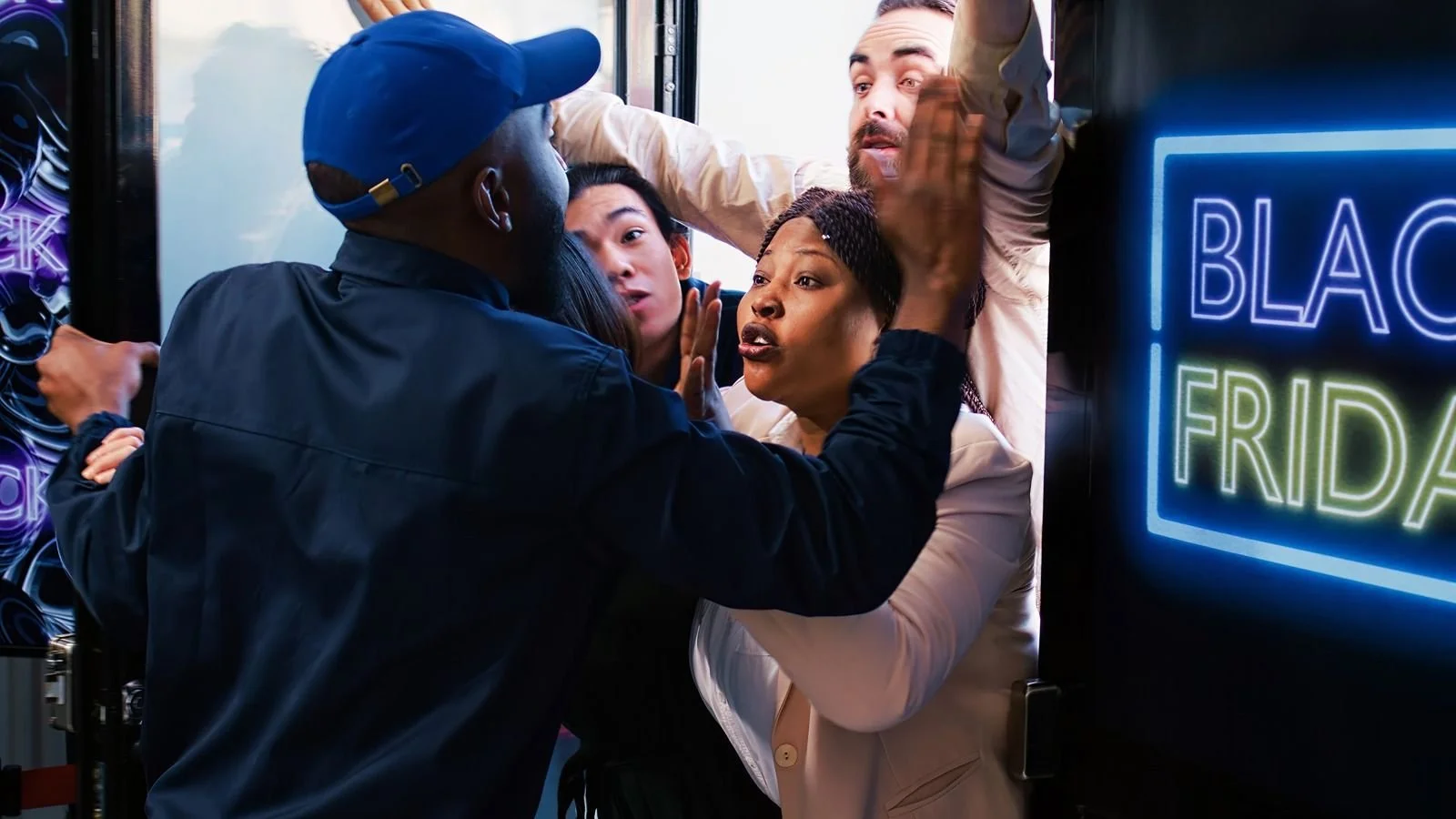
Every November, the same thing happens. Prices drop, red banners appear on every store and your inbox fills up with "biggest sale of the year" emails. Some of those deals really are the lowest prices you will see all year. Many others are regular prices dressed up with a big crossed-out number, or products made specifically to look cheap during the sale. In this guide, I'll show you how to tell the difference, which tools to use to check a price in seconds, and which kinds of tech are usually worth buying on Black Friday.
When is Black Friday 2026?
In the US, Thanksgiving falls on Thursday, November 26, 2026, so Black Friday is on November 27 and Cyber Monday is on November 30. In practice, though, the "day" has turned into a season.
Most big retailers start their early Black Friday sales in the first half of November, and many of the deals carry on through Cyber Monday week. That's good news, because it gives you time to check prices calmly instead of buying something at midnight because a timer says the deal is about to end.
Why so many Black Friday deals aren't what they seem
A discount is only as honest as the price it's compared to. A crossed-out "was" price is a claim made by the store, not a record of what people actually paid. Some sellers raise the price of a product a few weeks before the sale so the "drop" looks bigger, while others compare against a manufacturer's suggested price that nobody has charged in months.
The consumer group Consumers' Checkbook tracked prices at 25 major US retailers for six months and found that, at many of them, "sales" were running almost all the time. This doesn't mean Black Friday is a scam.
Plenty of products really do hit their lowest price of the year in late November. It just means that the percentage on the banner tells you very little. What matters is how today's price compares with what the product has actually been selling for.
Check the price history first
The single best habit you can build is checking a product's price history before you buy. It takes less than a minute, and these free tools do most of the work for you:
Keepa shows a detailed price chart for almost any Amazon product. You can install it as a browser extension, so the chart appears right on the product page, and set an alert for the price you want to pay.
CamelCamelCamel does the same for Amazon on its website. It also shows prices from third-party sellers and can email you when the price drops.
Google Shopping price tracking works across many stores. When you search for a product, Google often tells you whether the current price is low, typical or high compared with the last few months.
When you look at a chart, check two things. First, has the product sold at this price (or lower) before, for example during Prime Day or last year's Black Friday? Second, did the price jump up shortly before the sale? If the "deal" price is the same as the product's normal price in September, it isn't really a deal.

Understand what the crossed-out price means
On Amazon, the crossed-out price can mean different things depending on the label next to it. "Typical price" is based on the median price customers paid on Amazon over the last 90 days, without counting limited-time promotions.
That makes it one of the more useful reference prices you'll see. "List price" is the price suggested by the manufacturer or seller, and since April 2026 Amazon only shows it if the product has actually sold at that price recently, either on Amazon or at another retailer.
Other stores have their own rules and labels, and some of them are much looser. Treat any "compare at" or "regular price" label as a starting point, not as proof. The price history chart is always more reliable than the number the store chooses to show you.
Watch out for Black Friday-only models
This trick is most common with TVs. Manufacturers sometimes create special versions of their TVs, often called derivative models, that are sold only during the holiday season or only at one store. They usually look almost identical to a well-known model, but the model number is slightly different, and something has been cut to hit a lower price: fewer HDMI ports, a slower 60 Hz panel instead of 120 Hz, weaker local dimming or a cheaper processor.
These TVs aren't automatically bad, and if you just want a cheap screen for a bedroom, one can be perfectly fine. The problem is that you can't easily compare them. They have no price history, so the "regular price" can be anything, there are few or no professional reviews, and price-match guarantees usually don't apply because no other store sells the exact same model.
A quick test is to search the full model number online. If you only find Black Friday ads and no reviews, you're probably looking at a derivative model. If you want a television that's been properly tested, start with the models in our ranking of the best OLED TVs of 2026 and look for deals on those exact model numbers.

Compare the product, not the discount
A big discount on the wrong product is still the wrong product. Before you look at the price, decide what you actually need. Last year's flagship at 40% off is often a better buy than this year's budget model at 20% off, but a three-year-old phone that's about to lose software updates isn't a bargain at any price.
The same goes for earbuds: an expensive pair with great noise cancelling is pointless if you only listen to podcasts at home. If you're not sure which features matter, our guide to the best wireless earbuds of 2026 explains the differences between the main models, so you can check whether a discounted pair is worth it.
It also helps to compare the deal with the newest version of the product. Sometimes an older model is heavily discounted because its successor has just launched with a big upgrade, such as a much better battery or a newer chip. In that case, paying a little more for the new model can make more sense.
Tech that's usually worth buying on Black Friday
Some categories reliably get real discounts every year, mostly because brands use them to win new customers or clear stock before new models arrive in spring.
TVs from established lines. TV prices fall steadily throughout the year, and the models released in spring often reach their lowest prices around Black Friday, before the next generation is announced in January.
Streaming devices. Sticks and boxes such as the Roku Streaming Stick or the Google TV Streamer are among the most discounted items every November. Our ranking of the best streaming devices will help you choose the right one before the sale starts.
Headphones and earbuds. Popular models from Sony, Samsung, Apple and others often hit their lowest prices of the year, especially if they've been on the market for a while.
Smart home gadgets and trackers. Smart speakers, video doorbells and item trackers like the Apple AirTag are frequently discounted and make easy gifts.
Storage. External SSDs, memory cards and flash drives regularly get big price cuts, so it's a good time to sort out backups for your photos and videos.
What you should usually skip
The newest phones and laptops rarely get meaningful discounts in their first few months, and when they do, it's often in the form of a gift card or a deal that requires a new carrier contract. Read the fine print before you treat those as a price cut.
It's also worth being careful with very cheap, unknown-brand accessories. A no-name charger or cable at 70% off might not be safe or might charge your phone much more slowly than you expect. Our guide on how to choose the right phone charger explains what to look for, so you don't end up with something that's cheap for a reason.
Finally, be careful with "lightning deals" and countdown timers. They're designed to make you decide quickly. If you've already checked the price history and it's a good price for something you planned to buy, go for it. If not, let it go, because there will be another deal.
Know the price-match and return rules
Before you buy, check the store's price-match and return policies, because they often change around the holidays. Best Buy, for example, normally matches prices from a list of major competitors, including Amazon and Walmart, but it pauses competitor price matching around Black Friday.
In 2026, that pause runs from November 19 to November 30. If Best Buy itself lowers the price after you've bought something, you can usually still ask for the difference within its standard return window, which is 15 days for most products.
Many large retailers also offer extended holiday return windows, which usually start at the beginning of November and let you return gifts until mid-January. Always check the details for the exact store and product, as phones and other activatable devices often have shorter windows.
A quick Black Friday checklist
Make a list of what you actually need before the sales start.
Check the price history with Keepa, CamelCamelCamel or Google Shopping.
Search the full model number to make sure it isn't a Black Friday-only version.
Compare the deal with newer and older models of the same product.
Read the fine print on gift card and carrier deals.
Check price-match and return rules before you pay.
Final thoughts
Black Friday can save you a lot of money, but only if you treat the discount as the last thing you check, not the first. Decide what you need, look at the price history and make sure the model number is the one you think it is. If the price is the lowest it has been in months, that's a real deal. If not, skip it without feeling bad, because tech prices keep falling, and the next sale is never far away.
