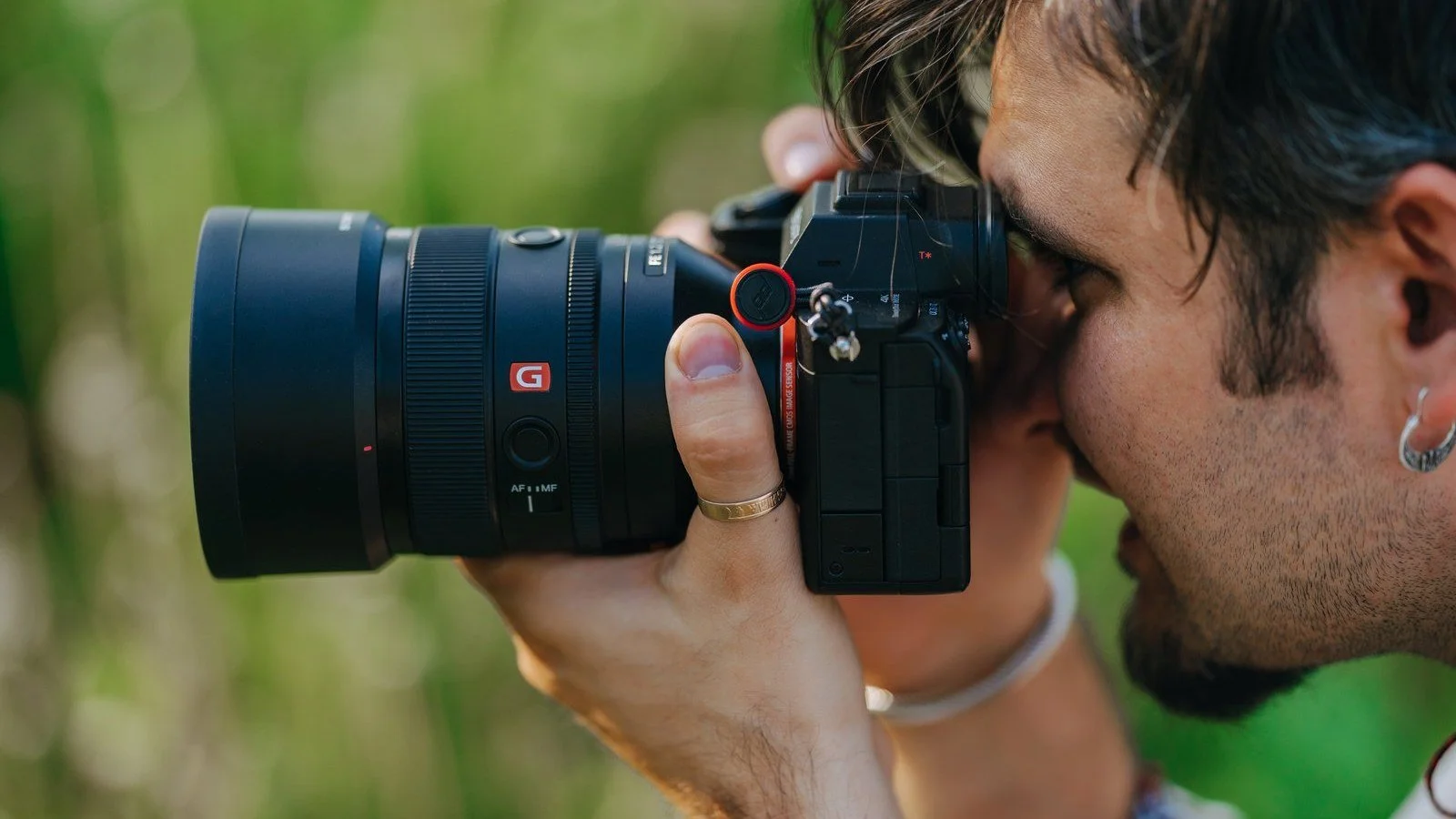
Autofocus decides whether your photo is sharp where it matters, and it's one of the biggest differences between cameras and phones. But terms like phase detection, continuous AF and eye tracking can be confusing. In this guide, I'll explain what autofocus is, how the main types work, which mode and focus area to choose, and the best settings for portraits, sport, video and more.
Quick rule: use single AF for subjects that stay still, continuous AF for anything that moves, and manual focus when the camera keeps getting it wrong, like in very dark scenes or through glass.
What is autofocus?
Autofocus, or AF, is the system that moves the lens elements so your subject appears sharp, without you turning a focus ring. The camera measures the scene, works out where the subject is and how far away it is, and adjusts the lens in a fraction of a second. Modern systems can also recognize faces, eyes, animals and vehicles and follow them around the frame.
Focus isn't the same as sharpness, though. A photo can be perfectly focused and still blurry because of camera shake or a moving subject, which is a shutter speed problem, not an autofocus problem.
The main types of autofocus
Contrast detection: moves the lens back and forth until the image has the most contrast. It's very accurate for still subjects, but slower and it can "hunt", especially in video.
Phase detection: measures light from two sides of the lens to know instantly which way and how far to move the focus. It's fast and great for moving subjects, and modern cameras build it right into the image sensor.
Hybrid autofocus: combines both, using phase detection for speed and contrast detection for final accuracy. Most current mirrorless cameras and phones work this way.
Laser, time-of-flight and LiDAR: phones use these sensors to measure distance, which helps in low light and with portrait mode.
Dual Pixel and quad-pixel AF: every pixel on the sensor helps with focusing, which gives smooth, reliable focus in photos and video.
Autofocus modes explained
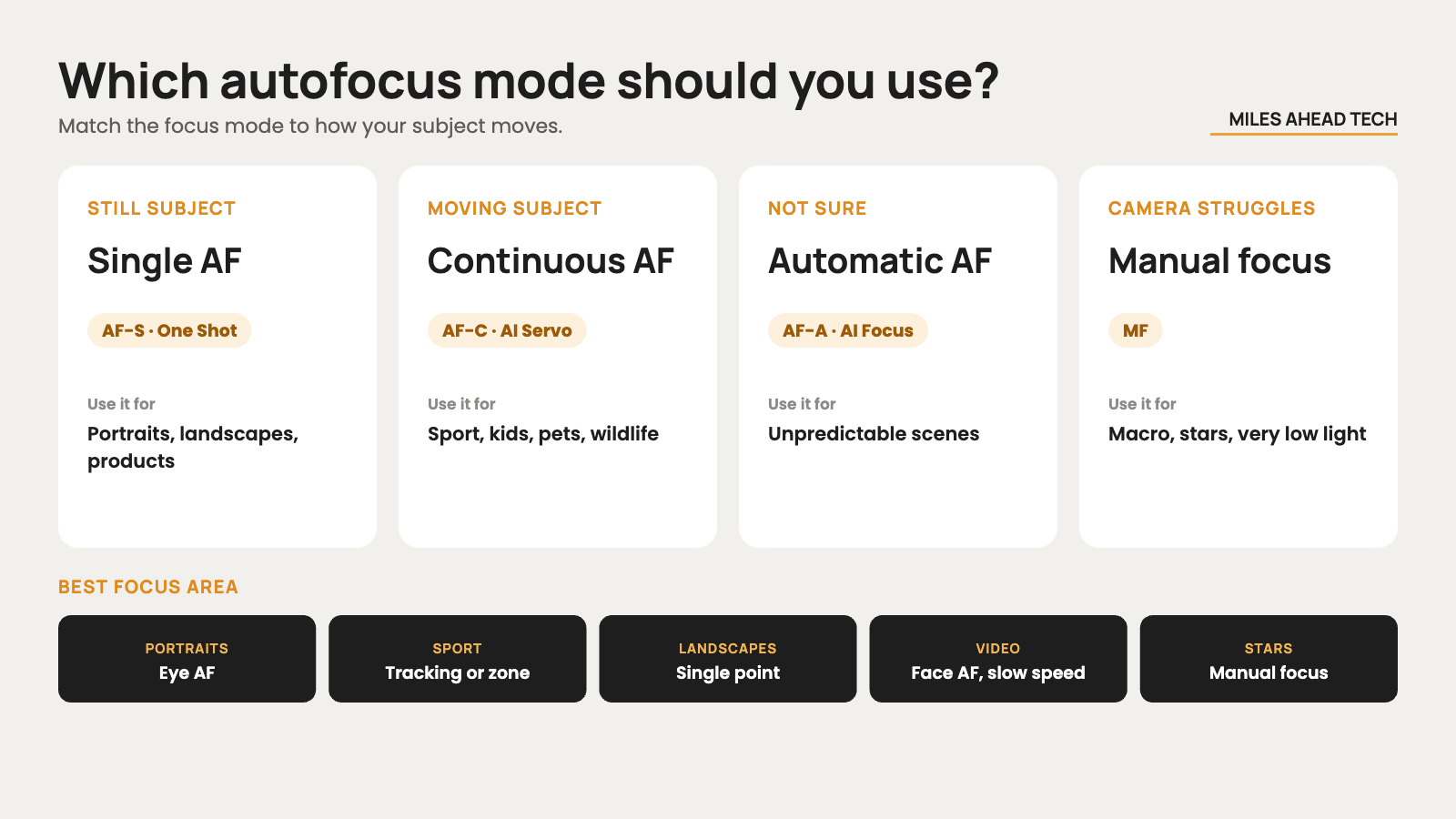
Every brand uses different names for the same modes, which is a common source of confusion. Here's a translation:
| Mode | Also called | What it does | Use it for |
|---|---|---|---|
| Single AF | AF-S, One Shot | Focuses once and locks while you half-press the shutter | Portraits, landscapes, products |
| Continuous AF | AF-C, AI Servo | Keeps adjusting focus as the subject moves | Sport, kids, pets, wildlife, video |
| Automatic switching | AF-A, AI Focus | Starts in single AF and switches to continuous if the subject moves | Beginners and unpredictable scenes |
| Manual focus | MF | You turn the focus ring yourself, often with peaking or magnification | Macro, stars, video and tricky low light |
Focus areas and subject detection
The focus mode decides when the camera focuses, and the focus area decides where. These are the common options:
Single point or spot: you choose one small point. Best for precise focus, like on an eye or a product detail.
Expanded point or zone: a small group of points. Good for moving subjects that you can keep roughly in one area of the frame.
Wide or full area: the camera decides. Fast and easy, but it may focus on the wrong thing.
Face and eye AF: finds faces and focuses on the nearest eye. The best choice for portraits and vlogging.
Subject recognition: newer cameras detect animals, birds, cars, trains and planes.
Tracking: locks on to a subject and follows it around the frame as long as you hold focus.
Autofocus on phones and for video
Phones handle autofocus almost entirely on their own, using phase detection, laser sensors and AI subject detection. You can still help: tap where you want to focus, and press and hold to lock focus and exposure before you recompose. For close-ups, switch to the macro mode or move back a little, since every lens has a minimum focusing distance. More phone tips are in our guide on how to take better photos with your phone.
Video needs different settings, because focus changes are visible:
Talking-head videos and interviews: face and eye AF with continuous focus, and a slower, smoother focus speed.
Sport and wildlife: continuous AF with tracking and a faster focus response.
Product demos: manual focus or a fixed focus point, so the camera doesn't jump between your hand and the product.
Cinematic shots: manual focus or tap-to-focus pulls on a touchscreen.
For vlogging, a camera with reliable face tracking makes this much easier. The DJI Osmo Pocket 4 keeps your face sharp while you move, and our guide to the gear you need to start a YouTube channel covers the rest of a simple setup.
When autofocus struggles and how to fix it
Low light or low contrast? Focus on an edge with more contrast, turn on the AF assist light or switch to manual focus. Busy background in front of the subject? Use a single point or zone instead of wide area. Glass, fences and reflections? Use a single point on the subject or manual focus.
Camera can't find the face? Make sure face detection is on and that the face isn't too small or turned away. Fast subject moving toward you? Use continuous AF with tracking and start focusing early.
Macro subjects? Manual focus, and move the camera slightly forward and back instead of turning the ring. Stars and distant lights? Manual focus, zoom in on a bright star on the screen and adjust until it's a tiny point. Focus pulsing in video? Slow down the focus speed, use face detection or switch to manual focus.
Best autofocus settings for common subjects
Portraits: single or continuous AF with eye detection.
Sport: continuous AF, zone or tracking, with subject detection and burst mode.
Wildlife: continuous AF with animal or bird detection, plus a zone area for small or fast subjects.
Street photography: continuous AF with face detection, or zone focusing at a fixed distance for speed.
Products and macro: single point AF or manual focus, ideally on a tripod.
Night photography: single point on a bright edge, or manual focus for stars.
Final thoughts
Good autofocus is about choosing the right mode and area for your subject, not just buying the fastest camera. Single AF for still subjects, continuous AF for motion, and eye detection for people cover most situations, and manual focus saves the day when the camera struggles.
When you compare cameras or phones, look at real-world tests of subject detection, low-light focusing and tracking, not just the number of focus points. A mirrorless camera like the Sony a6700 shows how far modern AI tracking has come, while the latest phones handle everyday focusing remarkably well. If you're choosing a phone, our guide on which iPhone to buy is a good place to start.
