If you've ever read a phone spec sheet, you've probably seen "Corning Gorilla Glass" listed for the screen. It's the toughened glass that protects the displays of billions of phones, tablets, laptops and smartwatches. But what does it actually do, how do the different versions compare and do you still need a screen protector? In this guide, I'll explain what Gorilla Glass is, how it's made stronger and what it can and can't protect you from.
What is Gorilla Glass?
Gorilla Glass is a family of cover glass made by the American company Corning. It's designed to sit on top of a display or the back of a device and survive everyday drops, pressure and scratches better than ordinary glass, while staying thin, light and very clear. Phone makers choose which Gorilla Glass version to use, so two phones with "Gorilla Glass" can have quite different protection.
Corning isn't the only option. Apple uses its own Ceramic Shield, developed together with Corning, and some Chinese brands use competing materials such as Xiaomi's Shield Glass or Huawei's Kunlun Glass. Gorilla Glass is still the best-known name, though, and you'll find it on everything from budget Android phones to flagship Samsung Galaxy models.
How is Gorilla Glass made stronger?
Most Gorilla Glass is aluminosilicate glass that goes through a process called ion exchange. The glass is dipped in a hot bath of molten potassium salt, and the larger potassium ions replace smaller sodium ions near the surface. Because they're squeezed into spaces that are too small for them, they create a layer of compression on the surface. A crack has to overcome that pressure before it can spread, which is why the glass can survive bumps that would shatter normal glass.
Newer versions also use glass-ceramic materials. These contain tiny crystals that stop cracks from spreading as easily, which mainly improves resistance to drops on rough surfaces like concrete and asphalt. Corning keeps tuning the chemistry and the depth of that compression layer to balance drop protection, scratch resistance, clarity and thickness.
A short history of Gorilla Glass
Corning developed an early version of this toughened glass in the 1960s under the name Chemcor, but it didn't find a mass market at the time. That changed in 2007, when Apple was looking for a scratch-resistant glass for the first iPhone and Corning revived the technology. Gorilla Glass then spread quickly across the smartphone industry, followed by numbered generations like Gorilla Glass 3, 5 and 6, the Victus line, and more recently glass-ceramic and anti-reflective versions.
Current Gorilla Glass versions
Here are the main versions you'll find in phones and other devices today:
| Version | What it's for |
|---|---|
| Gorilla Glass Victus 2 | Premium cover glass focused on surviving drops onto rough surfaces like concrete. Common in flagship phones. |
| Gorilla Glass 7i | A tougher option for mid-range and budget devices, with better drop and scratch performance than typical glass in that price range. |
| Gorilla Armor 2 | Anti-reflective, scratch-resistant glass-ceramic used on top Samsung Galaxy Ultra models. Reduces glare outdoors. |
| Gorilla Glass Ceramic | Glass-ceramic material designed for repeated drops onto rough surfaces like asphalt. |
| Gorilla Glass Ceramic 2 | A newer, thinner glass-ceramic designed for very slim devices. |
| Gorilla Glass with DX/DX+ | Used mostly for camera lens covers and smartwatches, with better light transmission and fewer reflections. |
Older versions like Gorilla Glass 3, 5, 6 and the original Victus are still used, especially in cheaper devices. The front, back and camera covers of the same phone may also use different glass, so check the manufacturer's spec sheet for the exact model rather than assuming one name covers the whole device.
What do Corning's drop test results mean?
Corning tests its glass with controlled drops from set heights onto surfaces designed to imitate concrete or asphalt. That makes different materials easy to compare, but the results aren't a guarantee for your phone. A real drop might hit a sharp stone or the edge of a step, land on a corner, or happen after the glass has already been weakened by scratches. The phone's frame, the shape of the screen edges, the case and even the temperature all affect the outcome. Treat drop claims as a sign of progress between versions, not a promise.
What Gorilla Glass protects against, and what still damages it
Modern Gorilla Glass handles everyday life well. It resists light scratches from keys and coins, survives many drops from pocket height and keeps the screen clear and responsive to touch. Newer versions are noticeably better than the glass from a few years ago, especially on rough surfaces.
It's still glass, though. Sand and small stones contain minerals harder than glass, so they can leave fine scratches, which is why phones carried in a pocket with sand often get scuffed. A hard drop onto a corner, sharp edge or concrete can still crack it, and deep scratches make later breaks more likely. Glass can also crack under bending or heavy pressure, like sitting on a phone in a back pocket.
Why scratch resistance and drop resistance are a trade-off
Glass makers can make cover glass harder to scratch or better at surviving drops, but it's difficult to maximize both. A harder, stiffer surface tends to resist scratches better but can be less forgiving when it hits the ground, while glass tuned for drops may scratch a bit more easily. Each Gorilla Glass version strikes a different balance, which is why Corning promotes some for drop performance and others for scratch resistance or reduced reflections.
Is Gorilla Glass the same as a tempered glass screen protector?
No. Gorilla Glass is the phone's own cover glass, bonded to the display by the manufacturer. A tempered glass screen protector is a separate, thin sheet you stick on top. Some protectors are made from branded glass, and some even use Corning materials, but the term "tempered glass" on a protector usually just means heat-treated or chemically strengthened glass of varying quality.
Do you still need a screen protector?
It depends on how you use your phone. A good protector is cheap insurance against scratches, and if it cracks, you replace a part that costs a few dollars instead of a screen that can cost a few hundred. It makes most sense if you often carry your phone in a bag or pocket with keys, spend time at the beach or on building sites, or plan to sell the phone later and want the screen in perfect shape.
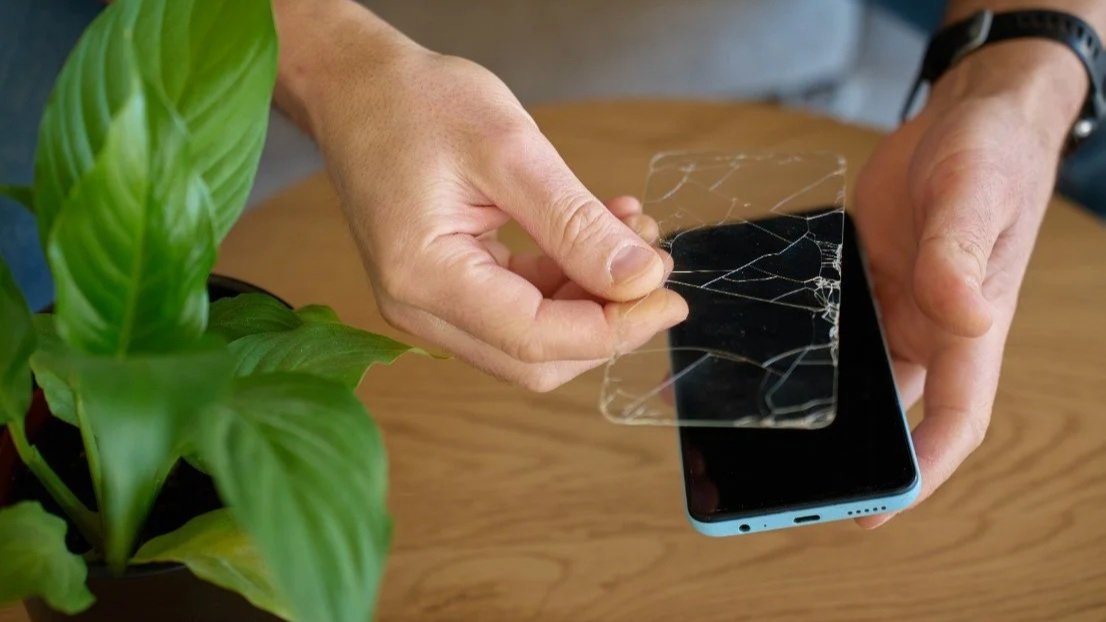
If you're careful and your phone has one of the latest glass types, you can reasonably skip it. Just choose carefully if you do use one: a cheap protector can add glare, reduce touch sensitivity or interfere with the fingerprint sensor, and it can cancel out the anti-reflective coating on phones that have one.
Why a good case matters just as much
Most screens crack when a phone lands on a corner or edge, not flat on its face. A case with raised edges around the screen and camera keeps the glass from touching the ground, and reinforced corners absorb the energy of a fall. Even with the best glass, a phone in a slim case or no case at all is far more likely to need a repair. Fast charging and heat don't affect the glass, but if you want to keep your phone in good shape for longer, our guide on how to charge your phone is worth a read too.
How to compare phone durability before buying
Check which glass the phone uses on the front and back, not just the display. Look at the frame material too, since aluminum and titanium frames protect the edges better than plastic. An IP68 rating tells you about dust and water resistance, not drop resistance, but it's still a good sign of solid build quality. Read reviews that include drop tests or long-term use, and check the price of a screen replacement and the warranty options. If you're choosing a new phone, our guides on which iPhone to buy and our Xiaomi 18 Pro coverage can help you compare current models.
Final thoughts
Gorilla Glass is a big reason modern phones survive daily life as well as they do, and every new generation handles drops and scratches a little better. It isn't unbreakable, though. A good case is still the most effective protection, and a screen protector is a cheap way to avoid scratches if you're hard on your phone. When comparing phones, check the exact glass on the front and back rather than relying on the "Gorilla Glass" name alone.
