iPhone Duo Is Official: Apple Finally Made a Foldable iPhone
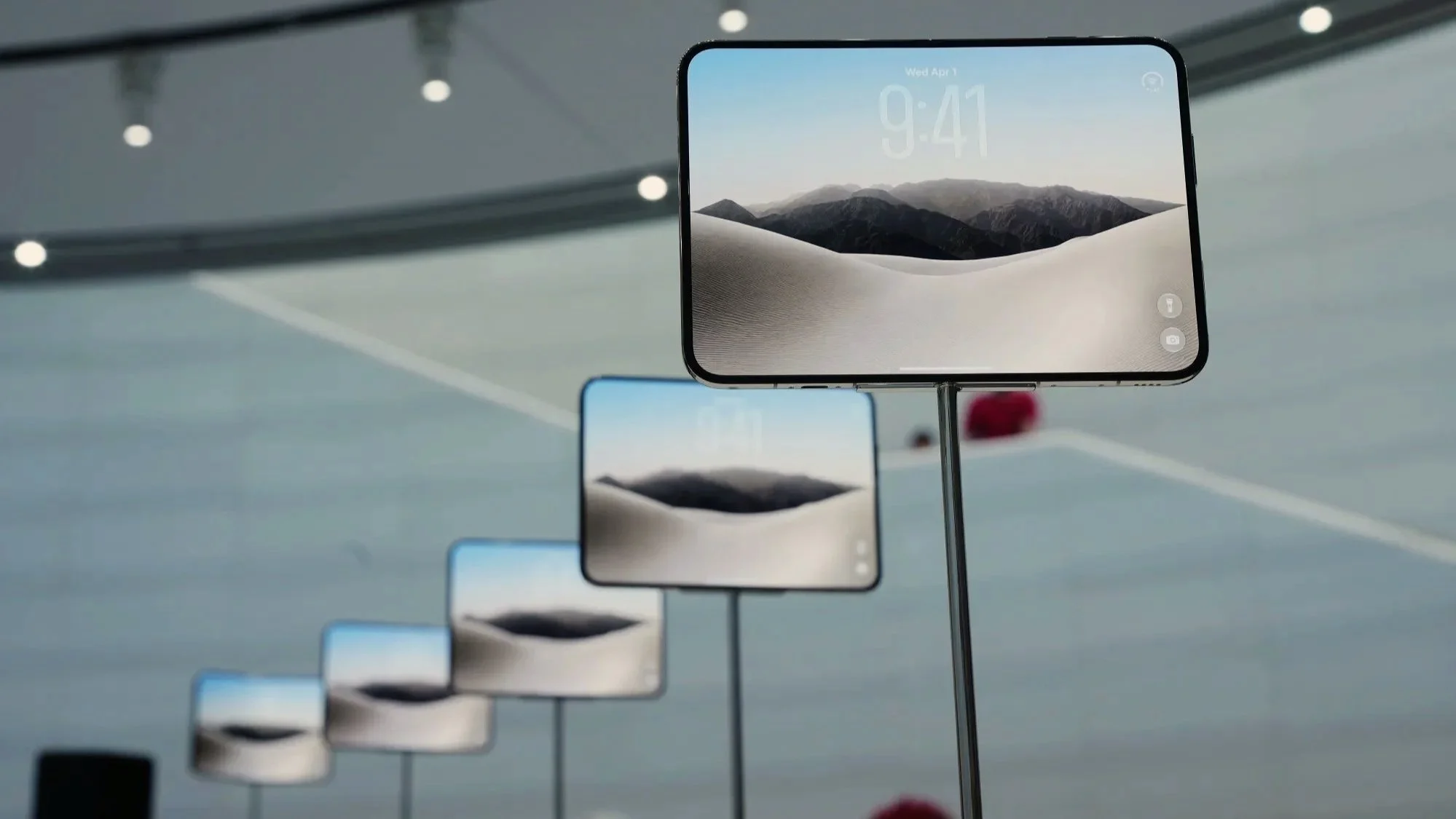
It finally happened. Apple has officially entered the foldable phone market with the iPhone Duo, its first iPhone that opens into a larger, tablet-like display.
Folded, the iPhone Duo behaves much like a conventional smartphone, with a 5.4-inch external display. Open it and you get a much larger 7.6-inch OLED screen—the biggest display ever fitted to an iPhone.
There's plenty of flagship hardware inside too. The Duo uses Apple's new A20 Pro chip, runs a redesigned version of iOS 27, has two 48MP rear cameras, a titanium hinge structure and a dual-battery system.
In the U.S., prices start at $1,999, with preorders beginning October 16 and general availability scheduled for October 23. Apple says the phone will launch in more than 70 countries and regions at the same time, with additional markets following on October 30.
Apple waited a very long time to make a foldable.
Now we finally know what its interpretation looks like.
iPhone Duo: key takeaways
Apple officially unveiled the iPhone Duo on September 9, 2026.
It is the first foldable iPhone.
The internal display measures 7.6 inches.
The external display measures approximately 5.4 inches.
Both displays are Super Retina XDR panels with ProMotion.
The internal OLED display reaches up to 3,000 nits peak brightness.
Apple uses a titanium frame and hinge cover.
The phone is rated IP68.
It runs iOS 27, redesigned to take advantage of the folding form factor.
The rear camera system consists of two 48MP Fusion cameras.
Apple's A20 Pro powers the device.
Battery life is rated at up to 31 hours of video on the internal display or 44 hours using the external display.
Wired charging can reach around 50% in 20 minutes.
U.S. pricing starts at $1,999.
| Feature | iPhone Duo |
|---|---|
| Starting price | USD 1,999 |
| Internal display | 7.6-inch Super Retina XDR OLED, ProMotion, nano-texture finish, up to 3,000 nits |
| External display | 5.4-inch Super Retina XDR, ProMotion, Always-On Display, Dynamic Island |
| Chip | A20 Pro: 6-core CPU, 7-core GPU, Neural Accelerators, dual 16-core Neural Engine |
| Rear cameras | 48MP Fusion main + 48MP Fusion ultra-wide |
| Front camera | 12MP Center Stage plus under-display FaceTime camera on internal screen |
| Video | Up to 4K Dolby Vision at 120 fps |
| Operating system | iOS 27 |
| Battery life | Up to 31 hours of video on internal display; up to 44 hours on external display |
| Fast charging | Up to 50% in around 20 minutes |
| Charging | USB-C, USB PD 3.1 with AVS, MagSafe |
| Connectivity | eSIM only, Apple C2 modem |
| Water and dust resistance | IP68 |
| Materials | Titanium frame and hinge cover |
| Storage options | 256GB, 512GB, 1TB, 2TB |
Release date, price and availability
Apple unveiled the iPhone Duo on September 9, 2026. Preorders begin on October 16 at 5:00 AM PT, with regular availability starting October 23 in the U.S. and more than 70 other countries and regions. A further 28 markets will receive the phone from October 30.
In the U.S., pricing starts at $1,999 for the 256GB model. That immediately puts the Duo into a very different category from Apple's conventional iPhones. And Apple appears to be treating it that way.
Rather than positioning the Duo as simply an even larger iPhone Pro Max, the company is introducing it as a new branch of the iPhone family—one built around the ability to switch between a normal phone and a much larger workspace.
Design and displays
The Duo uses the familiar book-style foldable design. When closed, you interact with the external screen much like you would with a conventional iPhone. Open it and the device transforms into a larger 7.6-inch display. You can also leave the phone partially folded, allowing it to work in several different positions.
That means you can use it:
fully folded as a normal smartphone;
completely open as a small tablet;
partially folded for video calls or watching content;
positioned almost like a miniature laptop;
in a tent-style configuration.
It's the kind of flexibility Samsung, Google and other foldable manufacturers have been experimenting with for years. Apple's job is to make it feel like it belonged in iOS all along.
Titanium around the fold
Apple uses titanium for the frame and hinge cover, giving the folding mechanism a premium material to match the device's premium—very premium—price. Apple also claims that when fully unfolded, the Duo becomes the thinnest iPhone it has ever made.
The device carries an IP68 rating. In Apple's controlled testing, it survived immersion in water at depths of up to 6 meters for as long as 30 minutes. As usual, Apple notes that water, dust and splash resistance aren't permanent and can decrease as the device ages.
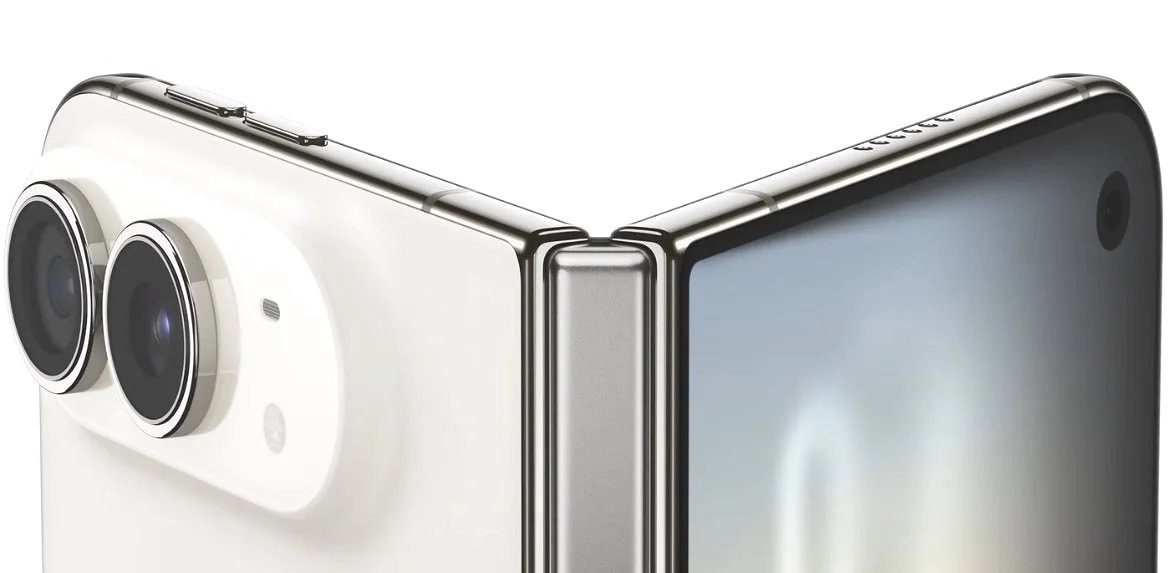
Foldables have traditionally required more compromises around durability than conventional phones, so seeing an IP68 rating here is particularly notable.
The biggest display ever fitted to an iPhone
Open the Duo and you're looking at a 7.6-inch Super Retina XDR OLED display. Apple says it provides around 50% more screen area than the iPhone 18 Pro Max. It also supports ProMotion and can reach a claimed peak brightness of up to 3,000 nits.
The panel consists of 10 ultra-thin layers and uses a nano-texture finish designed to reduce reflections. That's an interesting choice for a foldable, because the large internal screen is where the Duo starts moving away from simply being a phone.
This is the display you'd realistically use for:
reading;
editing photos;
working with documents;
multitasking;
watching video;
gaming;
browsing the web.
And if Apple gets the software right, that extra space should matter much more than simply having a physically larger version of the normal iPhone interface.
The internal camera disappears when you don't need it
Apple has also placed the FaceTime camera under the internal display. The idea is to keep the large screen looking as uninterrupted as possible when the camera isn't being used.
Under-display cameras have existed on other devices before, but Apple's implementation will be particularly interesting to test because hiding a camera beneath display pixels usually involves compromises in image quality.
For now, Apple is clearly prioritizing the uninterrupted-screen effect.
The outside screen is much more conventional
When the Duo is closed, you get a 5.4-inch Super Retina XDR display. Apple measures the standard rectangular diagonal at precisely 5.36 inches.
Despite being much smaller than the internal panel, it still includes several flagship iPhone features:
ProMotion;
Always-On Display;
Dynamic Island.
Apple says its usable screen area is approximately 90% that of the iPhone 18 Pro's display. That's important. A good book-style foldable shouldn't force you to open it every time you want to reply to a message or check Google Maps.
The outside screen needs to work as a normal phone. The big internal display should feel like something extra—not something you're constantly required to unfold.
iOS 27 has been redesigned for a folding iPhone
Hardware is only half the challenge with a foldable phone. Software is arguably harder. The iPhone Duo runs iOS 27, with Apple adapting the interface around multiple displays and different folding positions. Apps can transition between the external and internal screens, while partially folding the device can change how content is presented.
For example, the phone can be propped up at an angle while:
watching a video;
making a video call;
using certain apps;
viewing information without holding the device.
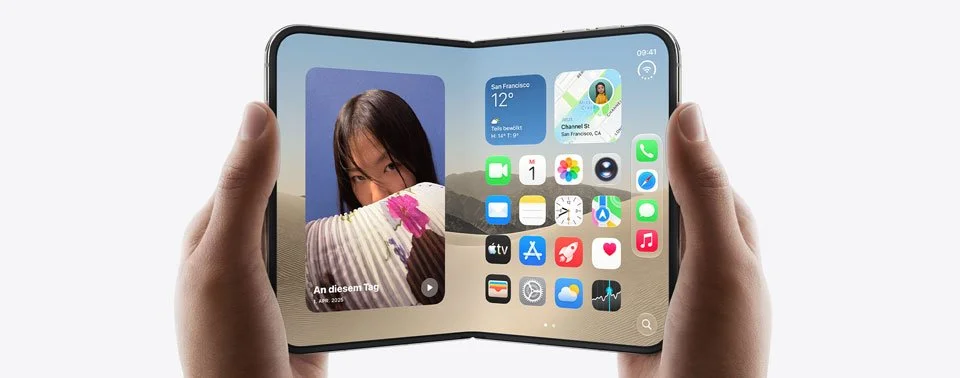
That's exactly where Apple's first foldable will succeed or fail. A folding display is impressive the first time you open it. What matters six months later is whether the software gives you a reason to keep opening it.
StandBy works without charging
Apple is also adapting StandBy for the Duo.
The phone can display information such as:
a clock;
photos;
weather;
calendar information;
widgets.
More interestingly, the Duo can use StandBy without being connected to a charger. Its folding design means the phone can support itself, effectively giving Apple a built-in stand.
It's a small example of something I'd like to see throughout iOS 27 on this device: features that exist because the phone folds, rather than features that simply happen to work on a foldable.
Two 48MP cameras on the back
The iPhone Duo uses a dual-camera system consisting of:
48MP Fusion main camera
48MP Fusion ultra-wide camera
It can capture images at 24MP and 48MP, supports macro photography and offers 0.5x, 1x and 2x framing options. Video recording goes up to 4K Dolby Vision at 120 fps.
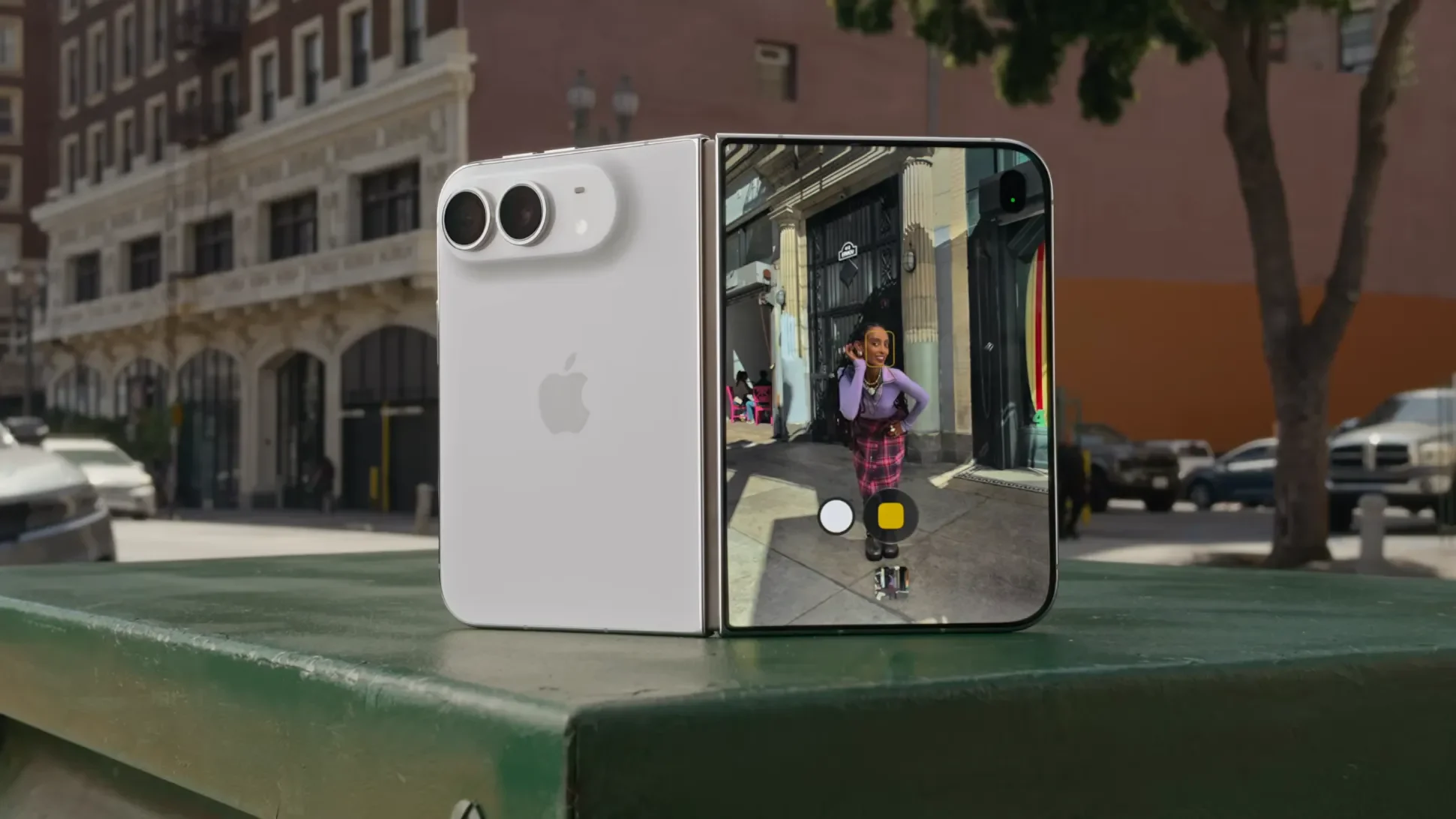
The lack of a dedicated long-range telephoto camera is notable for such an expensive device, but Apple is clearly emphasizing versatility from the two-camera system.
And because the Duo has two displays, Apple can do a few things a conventional iPhone can't.
Duo Preview lets your subject see the photo
Duo Preview uses the external screen as a preview display while you're taking photos with the phone unfolded. That means the person you're photographing can see the framing before you press the shutter.
It's hardly going to revolutionize photography, but it's one of those features that makes immediate sense on a foldable. Why have two displays if you're never going to let them talk to each other?
Intelligent Shutter can take the photo for you
Apple is also introducing Intelligent Shutter. The phone can recognize when everyone in the frame appears ready and automatically capture the photo.
There are additional camera features including:
intelligent focus tracking;
Cinematic mode effects;
improved low-light video;
enhanced portrait controls;
adjustable focus point and depth of field.
Photographic Styles also allow adjustment of tones, colors, texture and grain. Apple Intelligence adds editing features including Expand and Clean Up.
A 12MP Center Stage front camera
The front-facing camera uses a 12MP Center Stage sensor. It supports Center Stage framing, improved video stabilization and dual-camera recording. The internal display also contains the previously mentioned FaceTime camera hidden underneath the panel until needed.
That gives the Duo several possible camera configurations depending on how you're holding—or folding—the phone. Foldable phones occasionally feel like they were designed by someone who asked how many cameras you could reasonably point at yourself at once. Apple appears willing to find out.
A20 Pro powers Apple's first foldable
Inside the iPhone Duo is the same new generation of Apple silicon driving the company's latest premium iPhones: A20 Pro.
The chip includes:
6-core CPU;
7-core GPU;
Neural Accelerator hardware;
dual 16-core Neural Engine configuration;
hardware-accelerated ray tracing.
Apple claims the CPU is up to 20% faster than A19 Pro. Memory bandwidth has also increased by 50%, according to Apple.
Those improvements matter particularly on the Duo because the larger display creates more opportunities for multitasking and more demanding applications. You're not buying a 7.6-inch iPhone just to make the Calculator buttons enormous. At least I hope not.
Vapor-chamber cooling
The Duo also uses a vapor-chamber cooling system. Apple says this should help maintain performance during demanding workloads such as:
gaming;
AI processing;
photo editing;
video work;
longer high-performance sessions.
Cooling is especially important in a foldable because the internal layout is much more complicated than in a conventional slab-shaped phone. Apple has to fit a hinge, two batteries, multiple displays, cameras and flagship silicon into two unusually thin halves.
The fact that A20 Pro can deliver high peak performance isn't particularly surprising. How well the Duo sustains that performance without becoming uncomfortably warm will be much more interesting.
The iPhone Duo uses two batteries
Another first for the iPhone is the dual-battery design. Because the phone consists of two halves, Apple distributes the battery system across both sides of the device. Battery life depends heavily on which display you use.
Apple claims up to 31 hours of video playback using the internal display or 44 hours using the external display. That difference makes sense. A 7.6-inch OLED panel simply has much more screen to illuminate.
It also means someone who uses the Duo mostly folded could potentially see considerably longer endurance than a person spending most of the day using it like a tiny iPad.
Faster charging and USB PD 3.1
Apple says wired fast charging can take the Duo from empty to approximately 50% in around 20 minutes. Its testing used USB-C with USB Power Delivery 3.1, a 60W or higher power adapter and AVS support. The phone also supports MagSafe.
As usual, that doesn't mean the Duo is continuously pulling 60 watts into the battery. The charger and device negotiate power dynamically, and charging speeds vary throughout the charging curve.
Still, for an iPhone with two batteries and a very large internal display, faster top-ups are going to be important. The Duo also uses eSIM and Apple's C2 modem, which Apple says improves power efficiency.
How much does the iPhone Duo cost?
In the U.S., the iPhone Duo starts at $1,999 for 256GB of storage.
The full U.S. lineup is priced at:
256GB: $1,999
512GB: $2,199
1TB: $2,599
2TB: $3,199
The phone is available in two colors:
Star White
Night Sky
There is no getting around the obvious conclusion here. This is an extremely expensive iPhone. At $1,999 before any storage upgrades, the Duo sits firmly in ultra-premium smartphone territory. And the 2TB model crossing the $3,000 mark only reinforces that positioning.
Apple clearly isn't treating the Duo as an immediate replacement for the regular iPhone. It's a new flagship category sitting above it.
Should you care about the iPhone Duo
Yes—even if you have absolutely no intention of spending $1,999 on one. The Duo represents one of the biggest changes to the physical design of the iPhone in years. The important question isn't simply whether Apple managed to make a screen bend. We've seen plenty of folding screens already.
The interesting part is what Apple does with the format. The Duo gives you a 5.4-inch external phone that can transform into a 7.6-inch device, with ProMotion on both displays and software designed specifically around the transition between them.
Add:
A20 Pro;
two 48MP cameras;
titanium construction;
IP68 resistance;
dual batteries;
specialized two-screen camera features;
iOS 27;
and this isn't simply an experimental side project. Apple is clearly treating the Duo as a serious new member of the iPhone family.
But I wouldn't rush to buy generation one
There's also a very reasonable argument for waiting. This is Apple's first foldable.
There are questions we won't be able to answer from a launch presentation alone:
How visible is the crease?
How durable is the hinge after thousands of folds?
How good is the under-display FaceTime camera?
How well do third-party apps use the internal display?
How comfortable is the phone when closed?
How does the battery perform in real-world use?
Does the thin design affect sustained A20 Pro performance?
How practical is a 5.4-inch cover screen?
And perhaps most importantly: Does using the Duo actually feel better than simply owning a normal iPhone? That's the test that matters.
Apple finally joined the foldable race
Samsung has spent years refining the Galaxy Z Fold. Google has its own interpretation of the book-style foldable. Chinese manufacturers have pushed the category toward thinner designs, larger displays and increasingly sophisticated cameras.
Apple watched all of it. And waited.
That makes the iPhone Duo fascinating even before anyone has properly tested it. Apple rarely enters a hardware category first. It tends to arrive later and argue that its version is the one that finally makes sense.
Sometimes that works spectacularly. Sometimes it means you waited years for a feature Android users already forgot was new. The iPhone Duo now has to prove which kind of Apple launch this is.
What else did Apple announce?
The iPhone Duo wasn't Apple's only announcement at its September event. The company also unveiled the iPhone 18 Pro and iPhone 18 Pro Max, featuring A20 Pro, upgraded cooling, longer battery life and a new variable-aperture camera.
Apple also introduced:
Apple Watch Series 12;
Apple Watch Ultra 4;
AirPods 5.
But the Duo is easily the most structurally different device of the bunch. A faster processor and a better camera are expected. An iPhone that folds in half? That's something genuinely new.
FAQ
What is the iPhone Duo?
The iPhone Duo is Apple's first foldable smartphone. It uses a book-style design with a 5.4-inch external display and a larger 7.6-inch folding screen inside.
When was the iPhone Duo announced?
Apple officially unveiled the iPhone Duo on September 9, 2026.
When does the iPhone Duo go on sale?
Preorders begin on October 16, 2026, with general availability starting October 23 in the U.S. and more than 70 other countries and regions.
How much does the iPhone Duo cost?
The iPhone Duo starts at $1,999 in the U.S. for 256GB of storage. The 2TB version costs $3,199.
How big is the iPhone Duo's screen?
The external display measures approximately 5.4 inches, while the internal folding OLED display measures 7.6 inches. Both are Super Retina XDR displays with ProMotion.
What processor does the iPhone Duo use?
The iPhone Duo uses Apple's A20 Pro with a 6-core CPU, 7-core GPU, Neural Accelerator hardware and a dual 16-core Neural Engine configuration.
What cameras does the iPhone Duo have?
The rear system consists of two 48MP Fusion cameras: a main camera and an ultra-wide camera. It supports 24MP and 48MP photos, macro photography and Dolby Vision video recording at up to 4K/120 fps.
How long does the iPhone Duo battery last?
Apple claims up to 31 hours of video playback using the internal display and up to 44 hours using the external screen.
How fast does the iPhone Duo charge?
Apple says compatible wired fast charging can reach approximately 50% in 20 minutes using USB-C and an appropriate USB PD power adapter.
Is the iPhone Duo waterproof?
The iPhone Duo carries an IP68 rating. In Apple's laboratory testing, it survived immersion at depths of up to 6 meters for as long as 30 minutes. Water and dust resistance can decrease over time.
Should you buy the iPhone Duo?
I'd wait for proper testing before recommending the first-generation Duo. On paper, the combination of two ProMotion displays, A20 Pro, dual 48MP cameras and iOS 27 makes it one of Apple's most interesting launches in years.
But at $1,999 and up, durability, battery life, software optimization and everyday ergonomics matter far more than how impressive it looked during the keynote.
